Teacher and novelist François Bégaudeau plays a version of himself as he negotiates a year with his racially mixed students from a tough Parisian neighborhood.
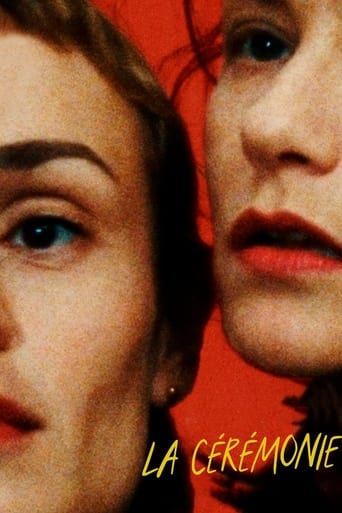
Sophie, a quiet and shy maid working for an upper-class French family, finds a friend in the energetic and uncompromising postmaster Jeanne, who encourages her to stand up against her bourgeois employers.
Julien, a young teacher, is wrongfully accused of sexual misconduct by a teenage girl from his class. As he faces mounting pressures from the girl’s older brother and her classmates, the situation spirals out of control. Allegations spread, the entire school is thrown into turmoil, and the teacher has to fight to clear his name.
As Islamic morality squads stage arbitrary raids in Tehran and as fundamentalists seize hold of the universities, Azar Nafisi, an inspired teacher, secretly gathers six of her most committed female students to read forbidden western classics. Unaccustomed to being asked to speak their minds, they soon removed their veils, their stories intertwining with the novels they read: just like the heroines of Nabokov, F. Scott Fitzgerald, Henry James or Jane Austen, the women in Nafisi’s living room dare to dream, hope and love as we experience the complexity of the lives of individuals facing political, moral and personal siege.
Fabienne is a star; a star of French cinema. She reigns amongst men who love and admire her. When she publishes her memoirs, her daughter Lumir returns from New York to Paris with her husband and young child. The reunion between mother and daughter will quickly turn to confrontation: truths will be told, accounts settled, loves and resentments confessed.
A series of events unfold like a chain reaction, all stemming from a minor event that brings the film's five characters together. Set in Paris, France, Anne is an actress whose boyfriend Georges photographs the war in Kosovo. Georges' brother, Jean, is looking for the entry code to Georges' apartment. These characters' lives interconnect with a Romanian immigrant and a deaf teacher.
On election night in 1981, celebrations spill out onto the street and there is an air of hope and change throughout Paris. But for Elisabeth, her marriage is coming to an end and she will now have to support herself and her two teenage children. She finds work at a late-night radio show and encounters a troubled teenager named Talulah whom she invites into her home.
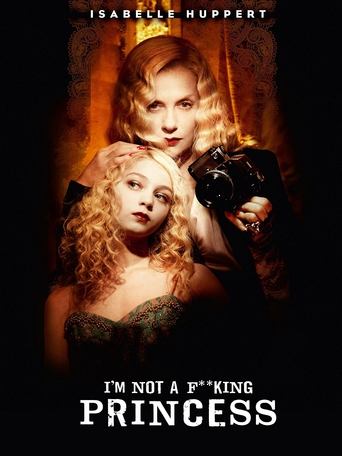
Young Violetta and her mother Hannah are a peculiar couple. Ten-year-old Violetta lives a quiet life with her grandmother, while her mother Hannah is an unpredictable photographer who lives off of the generosity of others. When Hannah forces her daughter to pose as a model, Violetta finds her life with her loving grandmother turned upside down.The resulting pictures quickly become a sensation for the trendy 70's Paris art scene, and Violetta finds herself caught in between her new stature as an art muse and her dull childhood.
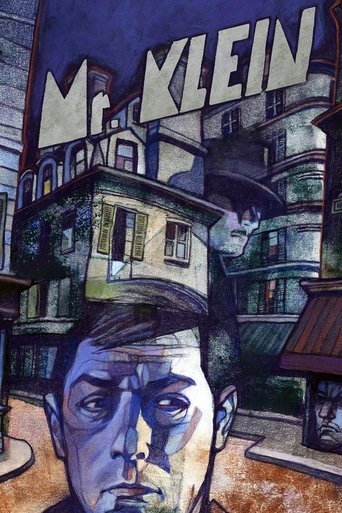
Paris, France, 1942, during the Nazi occupation. Robert Klein, a successful art dealer who benefits from the misfortunes of those who are ruthlessly persecuted, discovers by chance that there is another Robert Klein, apparently a Jewish man; someone with whom he could be mistakenly identified, something dangerous in such harsh times.
At Léon Blum High School in Créteil, France, a history teacher decides to have her weakest 10th grade class participate in a national history competition.
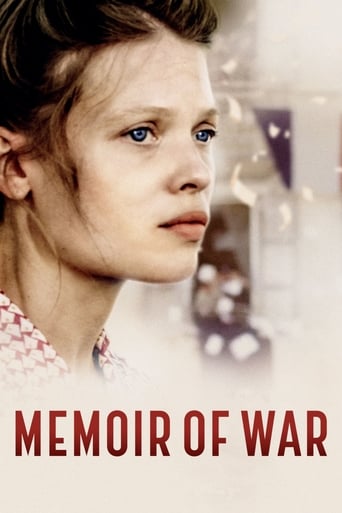
In the last days of the Nazi-occupied France, writer Marguerite Duras awaits the return of her husband, Robert Antelme, arrested for being a Resistance fighter and then deported, while she maintains a tense relationship with her ambiguous lover and a dangerous game with a French collaborationist. Even when the Liberation arrives, she must still endure the unbearable pain of waiting.
Nathalie teaches philosophy at a high school in Paris. She is passionate about her job and particularly enjoys passing on the pleasure of thinking. Married with two children, she divides her time between her family, former students and her very possessive mother. One day, Nathalie’s husband announces he is leaving her for another woman. With freedom thrust upon her, Nathalie must reinvent her life.
In 1966, Texas Western coach Don Haskins led the first all-black starting line-up for a college basketball team to the NCAA national championship.
After being expelled from Beecher Prep for his treatment of a classmate with a facial deformity, Julian has struggled to fit in at his new school. To transform his life, Julian's grandmother finally reveals her own story of courage of her youth in Nazi-occupied France, where a classmate shelters her from mortal danger.
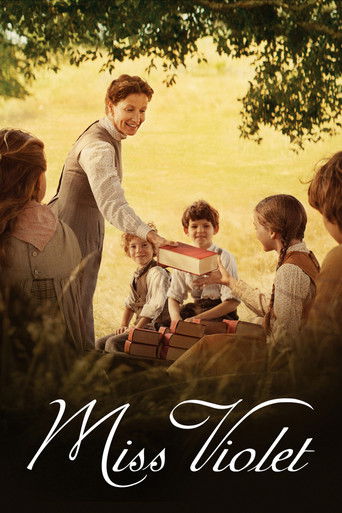
France. End of the 19th century. Louise Violet 40, a Parisian teacher, is sent on a mission to the French countryside. But in a place where the daily life is linked to the seasons, land and crops, she must first convince parents to send their kids to school. With the help of the mayor, she is gradually accepted by the parents and their children. But soon, her past catches up with her. Despite the obstacles she faces, Miss Violet will give her heart and soul to her belief that education is the key to freedom.
At an elite, old-fashioned boarding school in New England, a passionate English teacher inspires his students to rebel against convention and seize the potential of every day, courting the disdain of the stern headmaster.
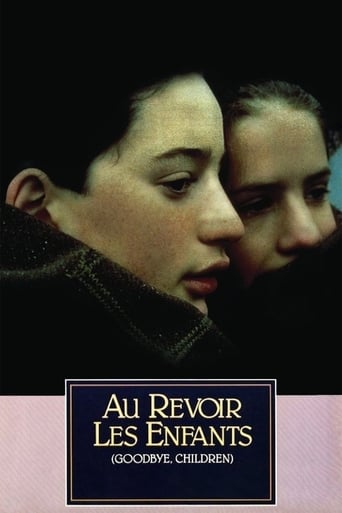
Au revoir les enfants tells a heartbreaking story of friendship and devastating loss concerning two boys living in Nazi-occupied France. At a provincial Catholic boarding school, the precocious youths enjoy true camaraderie—until a secret is revealed. Based on events from writer-director Malle’s own childhood, the film is a subtle, precisely observed tale of courage, cowardice, and tragic awakening.
Betrayed by an informant, Philippe Gerbier finds himself trapped in a torturous Nazi prison camp. Though Gerbier escapes to rejoin the Resistance in occupied Marseilles, France, and exacts his revenge on the informant, he must continue a quiet, seemingly endless battle against the Nazis in an atmosphere of tension, paranoia and distrust.
Yamakasi - Les samouraïs des temps modernes is a 2001 French movie written by Luc Besson. It demonstrates the skills of the Yamakasi, a group of traceurs who battle against injustice in the Paris ghetto. They use parkour to steal from the rich in order to pay off medical bills for a kid injured copying their techniques.
Activate your FREE Account!
You must create an account to continue watching