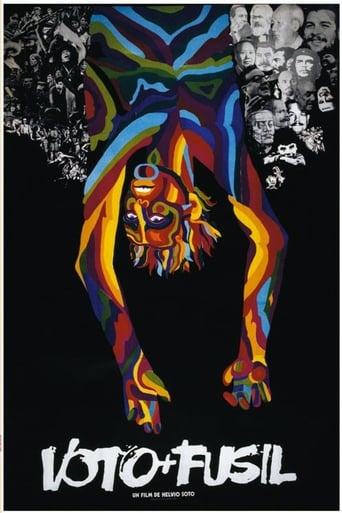
The political evolution in Chile seeing from three different times: 1937, 1947 and 1970. A film that shows how a revolution cannot be accomplished by electoral means, and how the wealthy class will always attempt to destroy that revolution, with the help of the armed forces, as soon as their privileges are threatened.
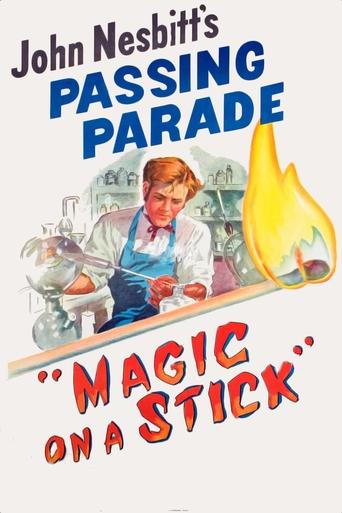
This MGM Passing Parade series short recounts how English chemist John Walker invented the wooden friction match during the 1820s.
This is a story about a young couple whose newly planned life was destroyed by the impact of the Great Purges of 1934–1938 in Mongolia. The main goal of this movie was to provide a testimony for the many Buryats and Mongolians who were persecuted during the Great Purges initiated by Joseph Stalin. In 1937 and 1938, many people, and even entire families, were killed after being wrongfully accused of conspiracies. The movie was shot on location near the Buryat village of Dadal in the Khentii province of Mongolia. The acting and other participation of many local villagers was a great addition to the authenticity of the film
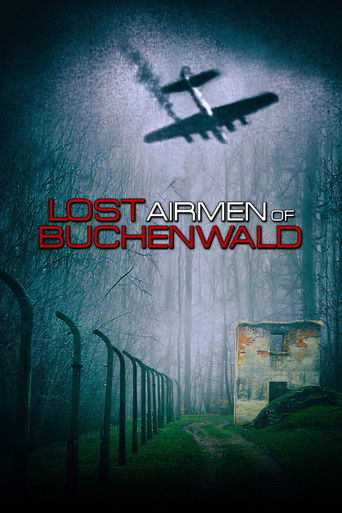
Chronicles the little-known story of Allied airmen imprisoned at the Buchenwald Concentration Camp in the waning months of World War II. In the summer of 1944, 168 airmen from the US, England, Canada and other Allied countries were captured in Paris by the German Gestapo and sent to the infamous "Koncentration Lager Buchenwald" in Germany. Falsely accused of being "terrorists and saboteurs," the airmen faced a terrifying fight for survival and a race against time to escape their execution. A controversial moment in history that their home countries tried to hush-up, Lost Airmen of Buchenwald tells this harrowing story through interviews with seven surviving members of the group, including their heroic commanding officer. The film follows them from their days hiding with the French Resistance to the darkest corners of the Holocaust, where they struggled to survive as Germany collapsed under the weight of the advancing Russian and Allied armies
Architect I.M. Pei speaks about his famous works, such as the addition to the Louvre in Paris, the East Wing of the National Gallery of Art in Washington, D.C., and the Meyerson Symphony Center in Dallas, Texas. Footage of these projects shows both interiors and exteriors. Various other experts comment on the impact and importance of Pei's work.
What follows is a black-and-white silent film set in the 1890s during the brewing Filipino revolution against Spanish colonialism. A series of tragic and comic sequences tells the Three Ages of an Indio (“common man”) as he progresses from boy bell ringer in a village church to teenage revolutionary to adult theater actor rehearsing a popular Spanish play.
A historical drama depicting the Finnish struggle against Tsarist Russia. Opens at the Winter Palace in St. Petersburg in February 1899. Tsar Nicholas II signs the February Manifesto, the purpose of which is to abolish Finnish self-government. An act that arouse widespread opposition in Finland.
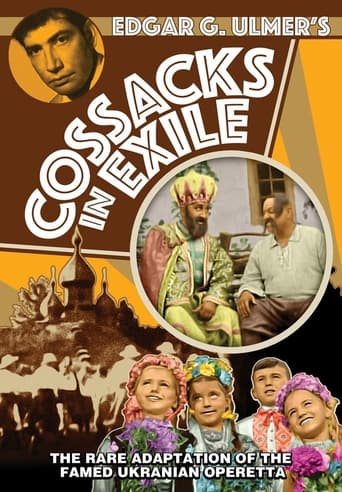
In Ukraine, in 1775, the Zaporogian Cossacks learn that Moscow is sending soldiers to destroy their fort. The Ukrainian villagers appeal to Czarina Catherine, but she insists that they join the Russian army or risk annihilation. Instead, the Cossacks burn their fort and flee on the Danube River to Turkey, where they live in peace, but still yearn for their homeland.
About the industrial history of the Urals and the contribution of the industrial enterprises of the Urals to the struggle against Nazi Germany.
This short film offers a glimpse into the life of Louis Hippolyte Lafontaine, the Chief Justice who died prematurely but left French Canada a legacy of political freedom. Shot entirely in Montreal, the film begins on the day of his death, and flashes back to tense moments throughout his life. French with English subtitles.
After the murder of the Russian Emperor Peter III, who was succeeded by Empress Catherine, Satan decides that the balance between good and evil on Earth has been destabilized. In order to set things right, he sends his representative to Earth - the teacher Farfa, who bears an unusual resemblance to Peter III. His mission is to seize power from the old Duke of Montenegro, and then to take back the Russian throne as Peter III. The people of Montenegro accept Farfa as their new leader, and he proclaims himself the new Emperor, Scepan Mali, successfully resisting an invasion by the Turks. Farfa is touched by the Montenegrins' kindness and courage, falls in love with the beautiful Elfa, and fails to follow Satan's plan. Not one to be crossed, Satan sets out to kill him.
In one of the most hostile lands on the planet, an ancient people called the Israelites forged an army and carved out an empire. Their ancient military exploits are described in one of history's most famous religious texts; the old testament of the Bible. But by reading between the religious lines, ancient military historians unlock the soldier's secrets of the bible by examining the weapons, the strategies; and the commanders, some of whom are unlikely warriors, like Abraham, Moses, and Deborah.
A retelling of the legend of Hua Mulan, warrior woman of China, who disguised herself as a boy to serve in the army in her frail father's place.
Enver Hoxha ruled Albania with an iron fist for nearly 40 years and for a long time Albania was the only Maoist regime and by far the most isolationist society in Europe - politically, psychologically and physically. Colonel Muro Neto was the man Hoxha charged with constructing the bunkers throughout the country which ostensibly protected Albania from its enemies both without and within. He became known as "Kolonel Bunker."
A poor girl is secretly in love with a wealthy young planter.
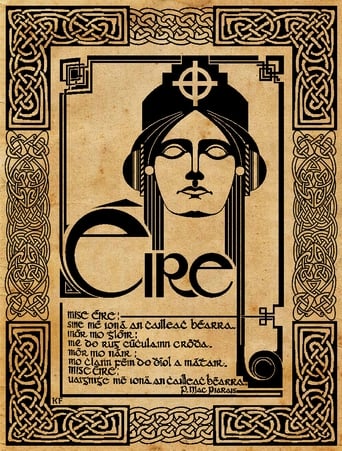
Inspired by Patrick Pearse’s poem Mise Éire (“I Am Ireland”), this documentary assembles archival footage from across Europe to trace the rise of Irish nationalism from the 1890s through the 1916 Easter Rising. Directed by George Morrison, the film chronicles key figures and events of the independence movement, with Irish-language narration and a score by Seán Ó Riada.
The struggle of Belarusian peasants against the oppression of Polish lords during the reign of Paul I.
Activate your FREE Account!
You must create an account to continue watching