In the middle of a broadcast about Typhoon Yolanda's initial impact, reporter Jiggy Manicad was faced with the reality that he no longer had communication with his station. They were, for all intents and purposes, stranded in Tacloban. With little option, and his crew started the six hour walk to Alto, where the closest broadcast antenna was to be found. Letting the world know what was happening to was a priority, but they were driven by the need to let their families and friends know they were all still alive. Along the way, they encountered residents and victims of the massive typhoon, and with each step it became increasingly clear just how devastating this storm was. This was a storm that was going to change lives.
King Rajasekhara, the king of Pandalam, finds a child on the banks of River Pampa during one of his hunting expeditions. A saint who appears there advises the king to adopt this child name him as Manikantan
Mehdi Lallaoui's documentary begins where it all ended, in New Caledonia, with images of the ruins of the penal colony where many Commune insurgents were deported, including Louise Michel. The director thus tracks down all the still visible traces of the insurrectional movement, in the South Pacific but especially in Paris, by following Alain Dalotel, author of numerous works on the Commune (and who died on May 29, 2020 in Bagnolet). He also tracks down all the archives, allowing us to understand, with the means of communication and information of the time (and with a voice-over by Bernard Langlois), what contemporaries experienced between March and May 1871: their hopes, their dreams, their fears, their anger.
A research-based essay film, but also a very personal perspective on the history of socialist Yugoslavia, its dramatic end, and its recent transformation into a few democratic nation states.
To tell the story of Joseph Kessel is to tell the story of the entire 20th century. He lived a thousand lives in one: reporter, novelist, exile, resistance fighter, screenwriter, adventurer, gambler, poet, alcoholic, cabaret lover, seducer, and inveterate globetrotter. Through archival footage and Kessel's colorful language, this film traces the journey of a man who turned reporting into an epic and reality into the stuff of novels.
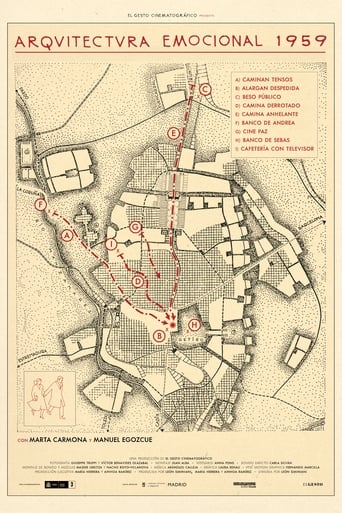
Here is the love story of Sebas and Andrea, first-time university students, in the 1958-1959 academic year. Here is how social class and ideology become insurmountable obstacles?... Here is architecture marking, inadvertently, the dotted line that ends up dictating its emotion.
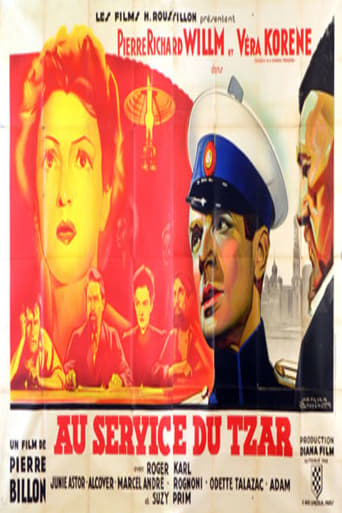
At the turn of the last century, a beautiful spy takes advantage of a handsome officer to get across the Russian border without her passport. They fall in love. But the Grand Duke also falls in love with the young woman, who has in fact been assigned to kill him. A jealous mistress kills the spy before she can commit the crime.
By early in the twentieth century, Nuremberg was regarded as the most anti-Semitic city in Europe. By 1929, Hitler had decided to make Nuremberg the "City of the Party Rallies" and a symbol representing the greatness of the German Empire. Even today, it is possible to see signs in Nuremberg of the megalomaniac proportions that the system was to assume.
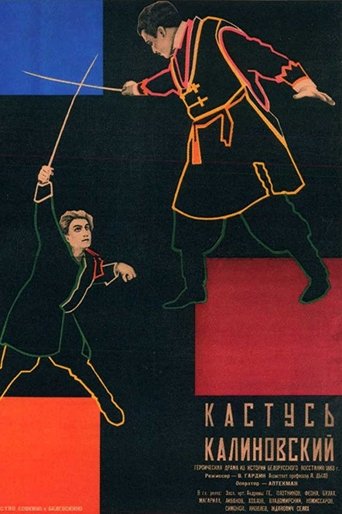
The film shows one of the heroes of the uprising of the Belarusian, Lithuanian and Polish people against forced Russification and the restoration of Poland's independence in 1863.
Discovery examines the history of "Golden age of Piracy." The program takes a detailed look at the harsh lives of pirates, their tactics, motivations and why they would choose such a life. The geopolitical forces that lead to the proliferation of pirates and their final demise are explained.
Brazil has a long tradition of coup d'états. These coups would have not been viable without the support of the big media, particularly TV Globo. Two Brazilian journalists in the UK reveal the manipulative tactics of these organisations.
The thrilling true story of a NZ-born heroine who became the Gestapo's most wanted woman in WWII. This showcase documentary-drama follows Nancy Wake's remarkable life.
This short film involves a dramatic retelling of Australia's actual war against their own national bird, two soldiers fight for their lives to escape a horde of bloodthirsty emus after a surprise attack. Link for movie : https://www.youtube.com/watch?v=dkmflJne_yU
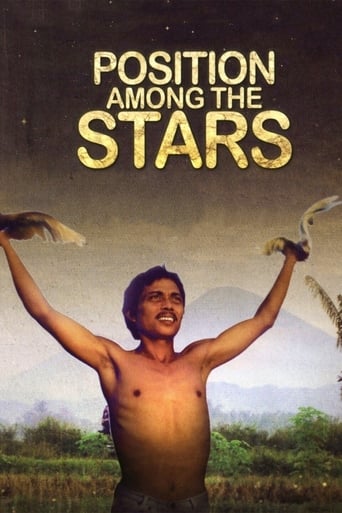
Through the eyes of grandmother Rumidjah, a poor old Christian woman living in the slums of Jakarta, we see the economical changing society of Indonesia and the influence of globalization reflected in the life of her juvenile granddaughter Tari and her sons Bakti and Dwi.
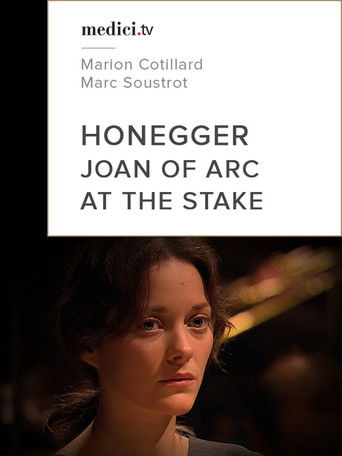
On November 17, 2012, Oscar-winning French actress Marion Cotillard joined the Barcelona Symphony and Catalonia National Orchestra for a performance of Arthur Honegger’s oratorio Joan of Arc at the Stake (Jeanne d'Arc au Bûcher) at the L'Auditori de Barcelona in Spain, broadcast live on Medici.tv. By Swiss composer Arthur Honegger, Jeanne d'Arc au Bûcher (1938) is an imposing oratorio. The libretto is a highly original creation by French poet and playwright Paul Claudel, who dramatises the last moments of the martyr's life. Originally written for actress Ida Rubinstein, the oratorio is written as a flashback in which Joan recalls her life, just before she dies. Honegger creates visually evocative ambiances and fills the orchestra with new sounds (saxophones, ondes Martenot). The initial prologue to the piece was added in 1944 as a symbol of the resistance during the Nazi occupation of France: again, Joan goes beyond her own story.
The headmaster of a private girls' school is doing her best to maintain strict discipline in the school. In addition to the loosening morals of the students, the warm relationship between two girls is a causing concern.
Activate your FREE Account!
You must create an account to continue watching