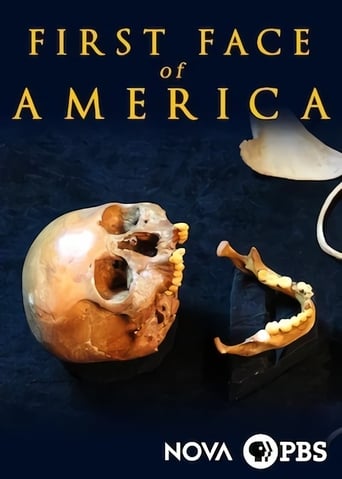
During risky expeditions in an underwater cave in Mexico, scientists unearth the skeleton of a 13,000-year-old prehistoric teenager to gain insight into the earliest known humans in America.
The film is about a young Georgian poet Mirza Gelovani, who died in WWII. It also tells the story of Mirza Gelovani’s contemporaries who sacrificed their youth to their homeland
Comedy with Renato Rascel
The story of Abbase Sultan, who ruled the country in the Abbasid Caliph.
From 1957 —the year in which the Soviets put the Sputnik 1 satellite into orbit— to 1969 —when American astronaut Neil Armstrong walked on the surface of the moon—, the beginnings of the space conquest were depicted in popular culture: cinema, television, comics and literature of the time contain numerous references to an imagined future.
Based on a real life story of sufi dervish Somuncu Baba, who lived in Aksaray in Turkey.
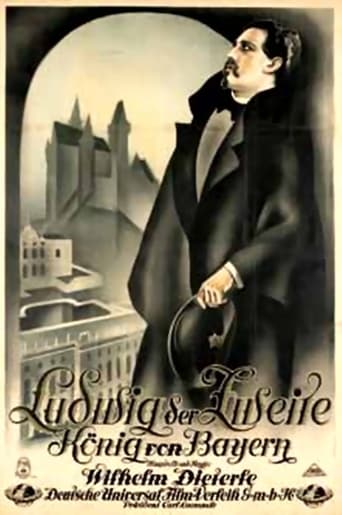
In the last years of his life, Bavarian king Ludwig II (1845 – 1886) devotes himself to ambitious architectural projects, which strain the state coffers to the extreme. The monarch, who is afraid of people, also withdraws more and more into a dream world at his various castles. His brother is already in a psychiatric institute and Ludwig is also eventually put under the care of psychiatrist Bernhard von Gudden. The king attempts to get out from under this guardianship at Starnberg lake…
Sisters whose husbands were arrested by the Gestapo struggle to get by with their children during WWII, while one grows close to a selfless doctor.
For over 30 years a man termed as a mad man, comes to light as his passionate work of collecting artifacts gathers momentum and gains the title of a museum. The film trails through the struggles of Victor Hugo Gomes, a Collector from India-Goa, and how he perceives to leave behind his collection.
A deceptively simple set-up: the director and his father watch a 1988 football match which the father refereed, their commentary accompanying the original television images in real time. A Bucharest derby between the country’s leading teams, Dinamo and Steaua, taking place in heavy snow, one year before the revolution that toppled Ceaușescu.
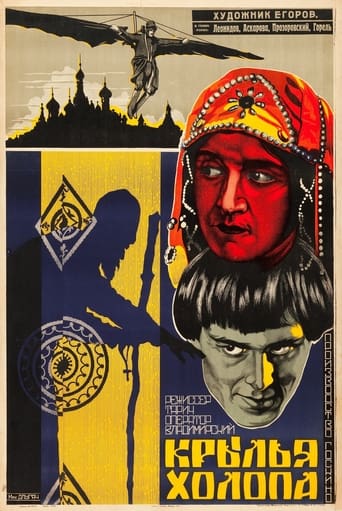
This SovKino production was a major early experiment in Soviet historical film about the oprichnina period of Muscovite history, combining the costumed drama and Gothic thrills of the genre with historical materialist commentary on the dialectical collision of scientific progress and patriarchal religious tyranny under Tsar Ivan the Terrible. It follows a self-taught inventor from the serf class Nikishka, whose efforts to build a flying machine incite accusations of witchcraft. Nikishka and his beloved Fima are persecuted by the feudal lord Kurlyatev, who took their village in a petty land squabble. They’re rescued when Kurlyatev’s lands are taken by the Tsar in his autocratic campaign against the feudal system. Ivan puts Nikishka to work in his linen mill, where the young serf is coveted by Tsarina Maria Temryukovna, who the Tsar’s been ignoring in favor of his cupbearer Feodor. A series of harrowing intrigues wind a bloody dance through bedchamber, feast hall, cathedral and dungeon.
A historical drama depicting the Finnish struggle against Tsarist Russia. Opens at the Winter Palace in St. Petersburg in February 1899. Tsar Nicholas II signs the February Manifesto, the purpose of which is to abolish Finnish self-government. An act that arouse widespread opposition in Finland.
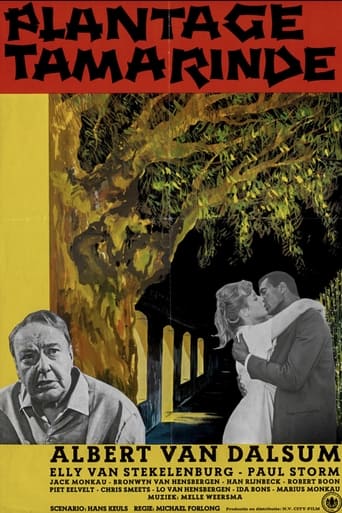
Social drama about a plantation owner who sees his world collapse around him. Planter Sjon Jan van Leent's familiar world is changing. His son is a disappointment, his daughter marries an educated black man, his wife dies and the plantation is not doing well. When he hears his son has made off with some money, he has a heart attack. From his sickbed he thinks about his life and finally he and his wayward children are reconciled.
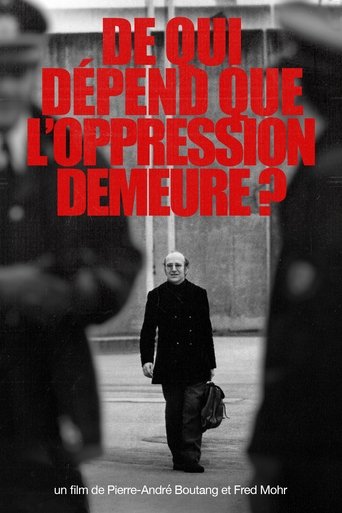
On May 21, 1975, the trial of the members of the Red Army Faction (also known as the Baader-Meinstein Gang) began. Four members appeared before the Stuttgart court to answer for the attacks that had been raging for five years in the young Federal Republic of Germany. The documentary, whose title is borrowed from Berthold Brecht's In Praise of Dialectics, recounts the conditions of the trials and detention of the Baader-Meinstein Gang members and the disqualification of Klaus Croissant as their lawyer.
After working for twenty years in the village of Kalinovaya Roscha, the once energetic chairman of the collective farm, Ivan Romanyuk, "broke down" and became a bureaucrat. Natalya Kovshik, the glib-tongued chairman of the village Council, and Karp Vetrovoy, a former Black Sea sailor, join the fight with him.
The best kept secret in American history is revealed. San Martín and Bolívar meet for the first and only time to chase the dream of a Grand Motherland.
Patrick Stewart narrates the investigation into the true origin of Britain's King Arthur and his fabled heroes, and whether or not Camelot exists in some forgotten corner of England.
The making of patriotic films was not rare among FAI productions, and Il bacio della gloria is one example, together with Armi e amori (1913) and Per la Patria! (1915). In this Speech from the Throne, which opened the 14th Legislature, the King of Italy stressed and underscored with his words the period recalling the story of the glorious conquering of Libya, sending warm greetings to the courageous men who fought, and to the heroes who fell, for the loftiness of their country. In a response worthy of these august words, immediately thereafter Pathé released this patriotic film which tells one of the many stories of courage which bring glory to the Italian flag.
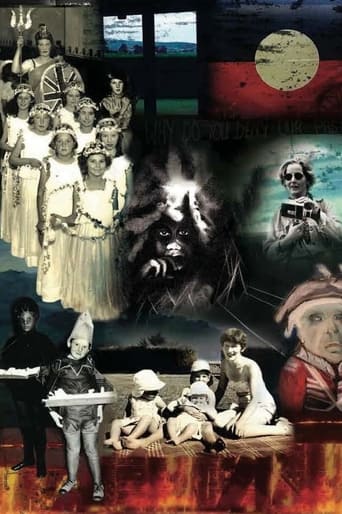
A poetic cine-essay about race and Australia’s colonised history and how it impacts into the present offering insights into how various individuals deal with the traumatic legacies of British colonialism and its race-based policies. The film’s consultative process, with ‘Respecting Cultures’ (Tasmanian Aboriginal Protocols), offers an evolving shift in Australian historical narratives from the frontier wars, to one of diverse peoples working through historical trauma in a process of decolonisation.
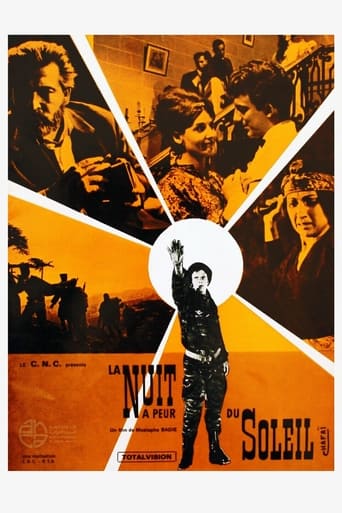
Historical film in four scenes which retrace the returns, the progress and the outcome of the war of liberation in Algeria. The first painting, “The land was thirsty” describes aspects of injustice and colonial oppression. The second “The Paths to the Prison” recounts the sufferings of the people engaged in combat. The last two are the stories of two lives.
Activate your FREE Account!
You must create an account to continue watching