The Castro revolution was just consolidating its power when, in 1961, over 100,000 students were sent from their schools into the countryside to teach the peasants there how to read. Coinciding with the Bay of Pigs invasion, in this docudrama, 15-year-old Mario (Salvador Wood) has come to a tiny village in the Zapata swamps and gradually wins the villagers over to his task. At the same time, he receives an education in the realities of rural life from the hard-working peasants.
The film consists of several novels reproducing the most vivid pages of the biography of the first Chairman of the Council of People's Commissars of Azerbaijan Nariman Narimanov (1870-1925).
Made in 1912, this film has become known as one of the greatest pieces of pre-Soviet cinema. The silent film tells the story of the Patriotic war of 1812 when Napoleon attempted to invade Russia. This joint French and Russian film sparked major excitement in Moscow at its premier screening and continues to entertain audiences throughout the world today. The 32-minute silent film was the point of origin for some of the more advanced camera techniques used today. Sirotin of the Voice of Russia said that, “The film is interesting to spectators even today and is frequently shown both in Russia and abroad.”
The life and times of famed Paraguayan musician Agustín Pío Barrios, from the years of his youth to his international success.
Ludmilla and Ludeshka's husbands disappeared on the Ukrainian front, while Tetiana's husband, a farmer from the Kherson region, was kidnapped during the first months of the Russian occupation. Torn between the hope of finding them and the anguish of impossible mourning, these three women are fighting a long and painful battle to obtain information. Director Anne Poiret followed them for two years.
In a dystopian America dominated by a tyrannical police state, a stirring revolution clashes with a forbidden romance.
A poet finds a new muse in young woman.
Ali, the caliph of the Islamic State between 656 and 661.
Farmers in the Île-de-France region, they filmed life on the farm, working in the fields, and family and village celebrations on 8 mm or Super 8 film. From the 1950s to the 1980s, these testimonies unfold a history of rural life: we move away from a peasant and family model to industrial agriculture for export. Through these family images, I attempt to answer my own questions about our agricultural future. In the 1950s, the land of Île-de-France fed us.
Today, the word "Auschwitz" is a synonym for the Holocaust. Thousands of Jews died there every day. With the help of some acted scenes, photos and graphics, the film tells of a day in May 1944. The starting point is a unique document: a photo album created by the SS perpetrators themselves. Almost all of the photos were taken at the end of May 1944, in just a few days. They show the cruel routine, the arrival of the victims, their "selection" on the ramp, the robbery of their property and the transformation of all those who were not immediately killed, into shaved, uniformed slaves. One survivor is Irina Weiss. On a photo she recognizes her little brothers and her mother - waiting unsuspectingly near the crematorium. The SS photographers captured all of this. Their identity is known today: one of them was Bernhard Walter, a "Stabsscharführer" who lived with his wife and three children near the extermination camp.
First-person accounts of slaves, ship owners, traders and colonists recounting the struggle to end the Atlantic slave trade. Drawing on the logbooks, letters and diaries of the victims and witnesses to one of history’s most brutal eras, depicted through dramatic recreations, bolstered by authentic drawings and period documents, featuring insight from historical experts around the world.
Evocation of the ruthless war which opposed from 1890 to 1894 the French colonial army to the young Ahydjere Behanzin, king and living god of Dahomey, who ended in his surrender and his exile.
1892. Vappu Biörcke and Kaarlo Härkönen get to know each other during the summer in the countryside at the birthday of Vappu Jalle-sedä. In Helsinki, the young people continue their courtship under the supervision of Vapu's aunt, Moster Mella. However, Vapu's father, business advisor Ossian Biörcke, is not as accepting when his daughter's actions begin to be revealed.
An unlikely couple - a Polish concentration camp inmate and a young German girl - stick together and try to survive the RAF bombing of Dresden in February 1945.
Tehran, 1948. A young Jewish couple, Danial and his wife Munes, decide to immigrate to the recently founded state of Israel. But their application is rejected on the ground of the documents against Danial's uncle, Yaghub, how is suspected of betrayal. A Zionist agent, named Yezghel, finds out Yaghub's home and stabs him. One of Yaghub's neighbours who witnesses the crime is blamed for murder. Fearing for their lives, Munes and Danial escape to the north of Iran in order to leave the country. The Neighbour's brother, Nuri, a journalist, sets off on their heels to bring them to the court to give testimony on his brother's innocence.
"Jiyan" takes place in Halabja about five years after Saddam's infamous chemical attack in 1988. Diyari (Kurdo Galali) has come from his new homeland, America, to put up a badly needed new orphanage. As construction proceeds, he gradually becomes acquainted with the tragic individual stories of the survivors. Prime among these is orphan girl Jiyan (Pirsheng Berzinji), and her lively young cousin Sherko (Choman Hawrami). Although he seems to fit right into life in this impoverished town, Diyari can hardly absorb the catastrophe that hit there, nor can he accept the level of injury that he encounters. When the orphanage is ready, Diyari says his goodbyes, plunging Jiyan back into quiet despair.
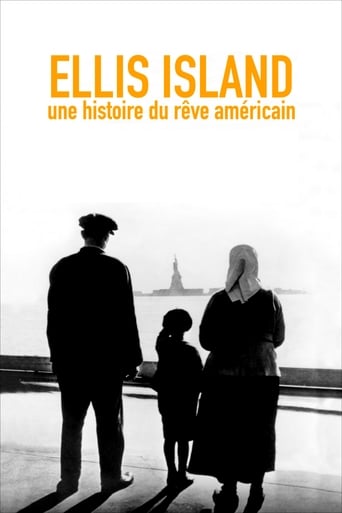
In 1892, Ellis Island, in New York Bay, became the main gateway to the United States for immigrants arriving increasingly from Europe. The story of immigration to the United States from 1892 to 1954, an enthralling polyphonic narrative that embraces both small and great history.
Examines how the Vatican spawned around Saint Peter’s tomb and the process behind the construction of some of its architectural marvels and monuments.
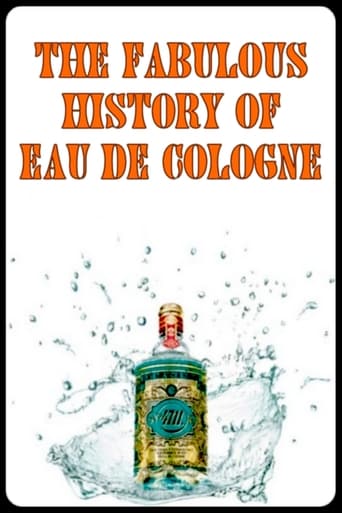
The history of the eau of Cologne goes back to almost four centuries, a history formed by extraordinary myths, family feuds and treacherous acts of commercial plagiarism. Its gradual use is a reflection of the evolution of society and its morality, in relation to body and hygiene, a gesture of intimacy. First perfume of kings, then the most popular fragrance, within reach of all the pockets.
Activate your FREE Account!
You must create an account to continue watching