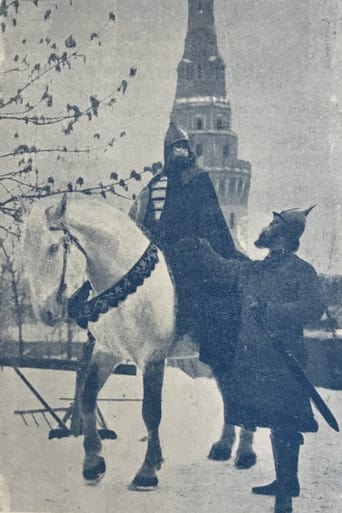
A significant part of the 1912 production "A Life for the Tsar" was used in this film.
To commemorate the 75th anniversary of D-Day, this special presents the key events of the Allied invasion of Nazi-held Europe and the subsequent battles that captured the control of the Normandy coast. Some of the last surviving veterans recall in detail the terror, patriotism and drama from the frontlines of war. This special also honors the diverse backgrounds of all who served.
This historical drama is based on a play by Henrik Ibsen and set in the year 1528. The central figure in the low-keyed story is a Norwegian noblewoman who is seeking to bring independence to that country despite the involved political intrigues of the Swedes and Danes, who are using Norway as a pawn in their rivalries.
Experimental Film. Documentary reflects the cultural life in modern Egypt.
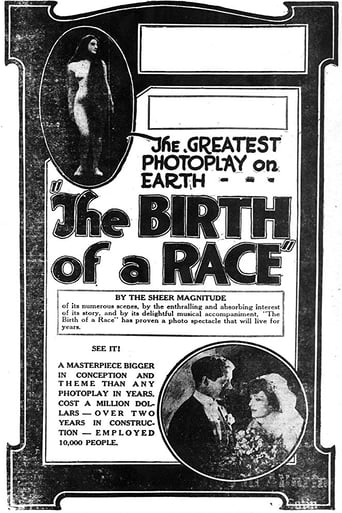
This epic traces, from the Beginning, the lineage of the race of peace-loving people. Mankind at its best is highlighted as greatness of character across the centuries is displayed: Noah heeding God's command, Moses leading the Israelities, Jesus Christ dying to save humanity and promote His message of peace. Moving into our modern epoch: Columbus's discovery of America, the Declaration of Independence, the Emancipation Proclamation; A race of free humans committed to the proliferation of peace and freedom. What becomes of this race when autocratic powers threaten democracy in the time of the first World War?
An unlikely group of soldiers and courtiers led by Marcount Berlocchio and his new bride Bernarda take possession of a distant fief. But their castle is a decrepit dump and their villagers aren't willing to be ruled.
A documentary about famous actor Adel Emam, compiling a series of interviews with him and other actors talking about his career and character.
During the Russian Civil War, pilot Sergey Sedov engages in battle with the Black Cat enemy fighter, controlled by the famous pilot Baru. In the battle, Sedov wounded Baru, but Sedov's plane fell apart in the air. Sedov was only miraculously saved. A few years later, Sedov and Baru meet in international competitions in Tehran. Baru are to defend the honor of a French company, Sedov and his student Ivanov - the honor of their country. In the end, the defeated Baru can only express hope of a rematch during a new meeting with Sedov in a future war. The film has not survived.
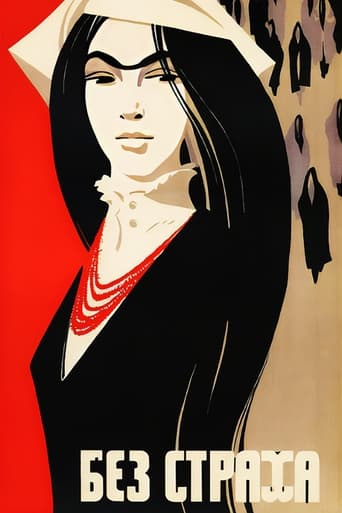
A Bolshevik army officer and Uzbek who has been nursed back to health by a young Uzbek woman to whom he is now married, gains responsibility for the local village in 1929. He is urged by comrades in Tashkent to have the local women drop their chadors and veils but he is also told that he should not force this on anyone. His wife declines to take off her veil, so a 14 year old girl steps forward to set the example, over the objections of the local Muslim clergy and most of the village men. After the girl is killed, and the commissar is shot, his wife takes him to the hills to nurse him back to health once again. She begs her husband to leave the village. Instead when he decides to return, she is pressured by her father to continue to wear the veil.
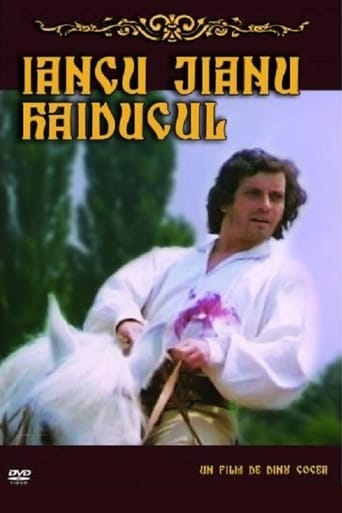
The movie is set in 1788-1843, a tumultuous era for Walla Wallachia, when the Phanariot regime was exercising its power over the people. In a world marked by oppression, the young Iancu Jianu becomes a symbol of resistance, fighting against abuses. Together with his friend Mereanu, Jianu plans courageous actions to stand up to the tyranny of the Phanariots and bring justice to the country. His journey brings him into contact with Tudor Vladimirescu, the leader of the 1821 rebellion movement, and the two unite in a fierce struggle for freedom and independence.
Join a team of archaeologists and the Discovery Channel in an investigation into the mysterious lines of the Nazca region in Peru. Created by the Nazcas, these huge sculptures are only visible from the sky and depict people, animal, geometric forms, and strange creatures. See a premier exhibition of pottery and textiles, musical instruments, and mummies from this long-forgotten, pre-Columbian civilization and visit Cahuachi, a buried city of pyramids and ceremonial buildings which may have once been the religious capital of the Nazca people
Showtime's "In the 20th Century" is a millennium-related strand of feature-length documentaries in which famous directors take on major subjects of their choosing. In the first of the six films, "In Search of the Happy Ending," filmmaker Garry Marshall delves into the institution of marriage as it has evolved in America throughout the past 100 years.
Johnny awakens as his teacher talks about liberty, only to find that everything has turned to clay. A giant hand plucks Johnny from his seat. Liberty herself has stepped down from her pedestal to teach a youngster the meaning of liberty.
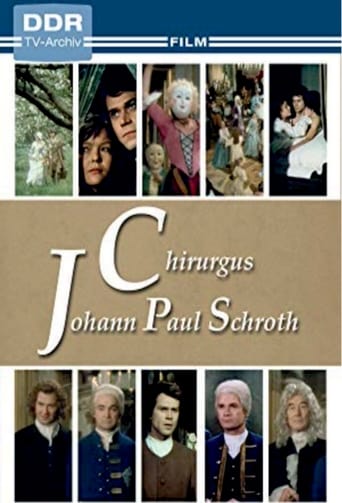
Johann Paul Schroth is a 20-year-old barber's apprentice who breaks out of the barber-surgeon's trade. Schroth wants to realize his dream, which is to put aside the beard knife and use the scalpel in such a way that people are healed and not tortured...
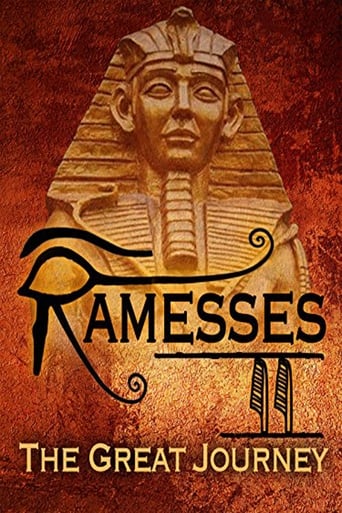
3,200 years ago, Egypt is living the final hours of its golden age under the reign of Ramesses II. After ruling the country for 67 years, the great pharaoh dies at the old age of 92. His mummy is burried in the heart of the Valley of the Kings. This is the beginning of his great journey towards the afterlife but only under one condition: that his tomb remains off limits forever. However, in the 19th century, many European adventurers explore the tomb of the king searching for the burial chamber. Then begins an archeological investigation, which reveals the story of Ramesses II after-life.
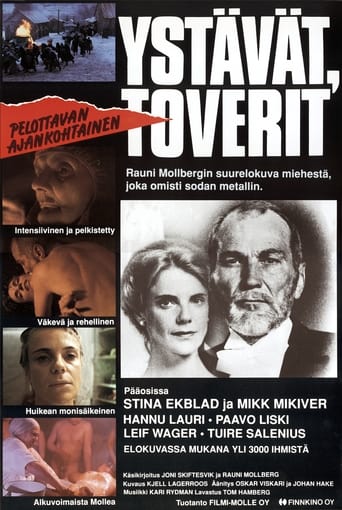
The boisterous good humor of Jurmala, the nickel-mine owner, is, if anything, only barely dented by the raging battles in Finland before, during and after World War Two. In fact, everywhere he goes, he meets prospective customers on all sides of the conflict with his all-inclusive greeting "Friends, Comrades." Indeed, the resource he is wrenching from the earth's bowels is necessary to all forms of industrial activity, and is especially necessary for military applications. Thus, he has no reason to fear that he will ever run out of customers. This doesn't prevent him from using every possible means to entice them. At home, his relationship with his wife is not so prosperous, and they resort to some extraordinary means to try and keep on an even keel.
"An average American family", the Middletons, visit the 1939 World's Fair and witnesses the advent of future technology, encountering robots and dishwashers for the first time.
Czech painter and illustrator Alphonse Mucha (1860-1939) ranks among the pioneers of the Art Nouveau movement at the end of the 19th century. Virtually overnight, he becomes famous in Paris thanks to the posters that he designs to announce actress Sarah Bernhardt’s plays. But at the height of his fame, Mucha decides to leave Paris to realize his lifetime project.
2 November 2004, shortly before nine in the morning. In The Hague, the report comes in that in Amsterdam Theo van Gogh has been murdered. All warning bells start ringing. With the country in flames, sometimes literally, politicians and officials in The Hague have to neutralise all sorts of known and unknown stings, and just when Van Gogh’s cremation seems to herald a period of relative peace, a second explosion follows: the attack on the Hofstad Network in the Laakkwartier in The Hague. A reconstruction of nine days of political high tension and flying dust, a decade after the assassination of the trendsetting filmmaker and TV presenter.
Activate your FREE Account!
You must create an account to continue watching