Seven wayward juveniles (the "Green Bottles" of the title) spend their days truanting and thieving. One by one they are caught and made to face the consequences of the choices they have made.
Philip Gardiner has spent his life on a crusade uncovering the truth behind myths, legends and ancient mysteries. In Secret Societies, Gardiner's quest is to uncover truths and secrets of the world's most powerful men in history. Gardiner delves into a world that is formidably hidden from our eyes and finds himself in situations that seem to mirror the fictional world of the Da Vinci Code. Discover the core of the 'Secret Societies' belief systems. Explore the secret origins of Freemasonry and the links to Serpent Cults. Examine the actual members of the "Illuminati," analyze the history of the group in Europe and America.
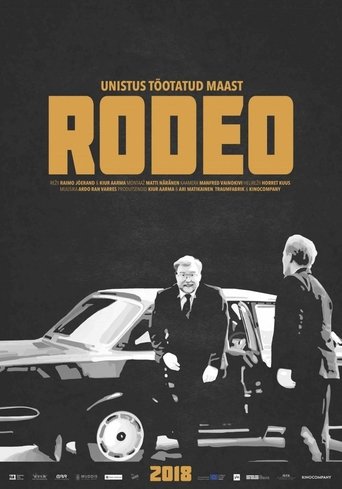
A documentary exploring the difficulties the newly-independent Estonia faced in the early 1990s after emerging from decades of Soviet rule. The film focuses especially on then-32-year-old and inexperienced Mart Laar, who became country's prime minister while there still were tens of thousands of Soviet soldiers in the country.
When rumors spread about a "child prodigy" among the Mozarts in Salzburg, the archbishop orders an investigation in which the seven-year-old Wolfgang has to demonstrate his talent before a committee of scholars. Soon afterwards, Leopold Mozart and his son are traveling all over Europe to play for patrons and admirers. The new Archbishop of Salzburg, Count Colloredo, is not very enthusiastic about Mozart and dismisses him. Mozart marries Constanze Weber, settles in Vienna and has his first successes, earning him commissions and the goodwill of Josef II. In the last years of his life, his situation worsens; Mozart runs into financial difficulties and health problems, but still works incessantly.
This John Nesbitt's Passing Parade short tells the story of 18th Century French physician Dr. Philippe Pinel, who initiated enlightened, humane treatment of the mentally ill.
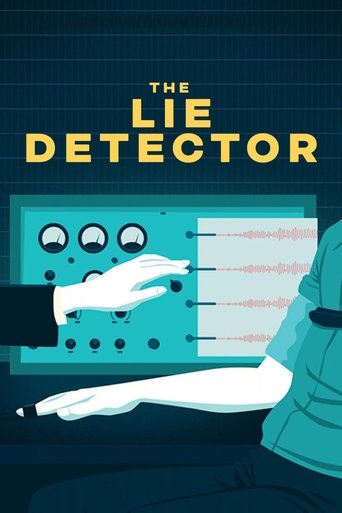
In the first decades of the 20th century, when life was being transformed by scientific innovations, researchers made a thrilling new claim: they could tell whether someone was lying by using a machine. Popularly known as the “lie detector,” the device transformed police work, seized headlines and was extolled in movies, TV and comics as an infallible crime-fighting tool. Husbands and wives tested each other’s fidelity. Corporations routinely tested employees’ honesty and government workers were tested for loyalty and “morals.” But the promise of the polygraph turned dark, and the lie detector too often became an apparatus of fear and intimidation. Written and directed by Rob Rapley and executive produced by Cameo George, The Lie Detector is a tale of good intentions, twisted morals and unintended consequences.
Based on true events, Nagendra Prasad Sarbadhikari, "The Father of Indian Football", was the first Indian to play the sport and open a professional football club in the country.
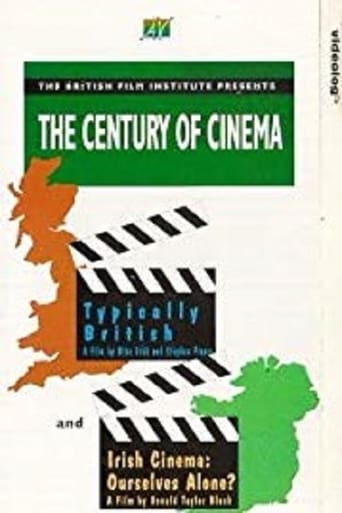
The Irish entry in the BFI's "Century of Cinema" documentary series examines Irish filmmaking in a decade when the country is going through a highly significant period of creativity and growth in cultural self-confidence. The film makes connections and contrasts, illuminates parallels and continuities, as it weaves through 100 years of cinema in Ireland.
A historian travels through time from the swampland that one day turned into the squalor that it has become in contemporary time.
Rap Dixon was a legendary African American baseball player who played in what were known as the Negro Leagues. This film chronicles his life and baseball accomplishments while exploring how racism and segregation affect how people are remembered in history.
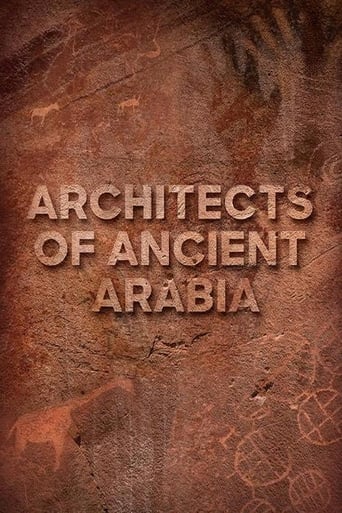
Unearthing the previously unknown aspects of the ancient history of Saudi Arabia, experts uncover traces of a society from more than 7,000 years ago. Archeologists unearth evidence for an ancient ritual, completely unexpected and extraordinary as they continue to piece together Al Ula's rich history in time to welcome guests from around the world, as specialist teams seek to decipher the activities associated with ancient stone structures, with their findings aiding to deepen the historical legacy of the country, and of ancient Arabia. Using multiple modern technologies to record tens of thousands of sites, they choose some to explore in greater detail, to begin piecing together a new chapter in the story of human civilisation.
A fellow member of the company named Hanjiro tells Koharu, an actress in a traveling theatrical troupe, about a keepsake folding fan that his lost love Lady Okyo gave him years ago. It turns out this fan is a precious clan heirloom whose possession, for convoluted reasons, will determine the clan's leadership. Sword-slinging bad guys descend to capture the fan, and Koharu embarks on a road trip to Edo to return the MacGuffin to the rightful hands of Lady Okyo.
First Invasion: The War of 1812, a History Channel documentary that first aired in 2004, portrays a young United States of America "on the brink of annihilation" as it battles the largest and most powerful empire on earth. Critics say the documentary is far too pro-American, and that it ignores or downplays crucial elements of the War of 1812. Others praise First Invasion for its compelling presentation of a far too neglected period of history.
Contemporary film critics regard the epic film I Am Cuba as a modern masterpiece. The 1964 Cuban/Soviet coproduction marked a watershed moment of cultural collaboration between two nations. Yet the film never found a mass audience, languishing for decades until its reintroduction as a "classic" in the 1990s. Vicente Ferraz explores the strange history of this cinematic tour de force, and the deeper meaning for those who participated in its creation.
In 1928 an under-resourced and untested team from New Zealand and Australia competed in what is considered to be the toughest sporting event in the world. Many considered the entry of these courageous underdogs, racing as a team of 4 against teams of 10, a joke. One French journalist called their attempt nothing short of murder. 168 riders started the more than 3,500-mile race, only 41 finished. Surprisingly this remarkable story about the achievements of these brave athletes has never been told on film, until now. Phil Keoghan - television personality, adventurer and cycling enthusiast, retraces the 1928 Tour de France route, bringing history to life. Following the original course and schedule, riding a vintage bike, Phil and his team will average 150 miles a day for 22 stages.
The arrival of the West Indian Companies to Natal in the XVII century is just the beginning of this violent story that pushes Bernarda and her family to run away from the city and from the invasion. In the Potengi Mill she meets the foreman's son Rafael and they immediately discover a passionate love. It will give them the force to try to survive during those violent years triggered by Jacob Rabbí, a German assigned by Prince John Maurice of Nassau to command the conquest.
A girl and a boy meet by a chance in unaware of consequences on one day. A modern parable inspired by true events.
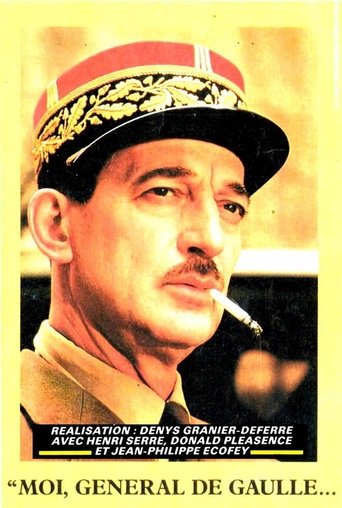
The first fiction film about de Gaulle. At the origin of the adventure, there is a script commissioned in 1942 from William Faulkner. It lacked the end of the story, and the view of the French of today. The destinies of the great and the small intersect, without meeting. Epics live on dreams as much as on reality.
Based on the novel by Venezuelan writer Enrique Bernardo Núñez, the film tells the story of engineer Leiziaga discovering his historical doubles in the context of the colonization of the island of Cubagua in Venezuela. In this way, two stories are intertwined: one that takes place in the 16th century and another in the 20th century. The first story focuses on the life of the Spanish settlers who arrived in Cubagua and the exploitation of the indigenous peoples for pearl extraction; the second story, set in the 1920s, tells of Leiziaga's archaeological expedition, financed by a multinational oil company, in which he visits the island to study the ruins of the Spanish settlement, which leads him to reflect on the passage of time and the destruction caused by human exploitation, and through a game of mirrors, to realize the relationships between the past, present and future.
Activate your FREE Account!
You must create an account to continue watching