Recent discoveries by archaeologists and researchers have shed new light on the Incas, shaking up our presumptions of this fascinating pre-Colombian civilisation.
The noble patrician Gaius Marcius became famous for his military exploits and victories over the enemies of the Romans, the Volscians. However, his hatred of the plebeians and thirst for power led to Coriolanus being condemned to eternal exile from Rome. Then he decided to betray his homeland and take command of the Volscian army.
Documentary about the founding of Ciudad Nezahualcóyotl on the outskirts of Mexico City in the sixties.
Anthim the Iberian - Antimoz Iverieli, a Georgian theologian, scholar, calligrapher, philosopher and one of the greatest ecclesiastic figures of Wallachia, led the printing press of the prince of Wallachia, and was Metropolitan of Bucharest in 1708-1715.
Portrait of Si Mohand U M'hand, an Algerian Amazigh poet from the end of the last century, whose tragic destiny was marked by wandering and revolt. Refusing all compromise, he lived in insubordination to the new order imposed by the French colonial presence in Algeria.
Hungary, 1950s. Istvánka is a sensitive little boy, longing for a role model and friendship, whose father died in the war before he was born. Before school starts, his mother takes him from the countryside to the capital. One day, he meets Lacy Márity, a 21-year-old big boy from Budakeszi, who from then on not only goes to play football with him, but also answers his most secret questions. He becomes his friend. Istvánka then becomes more tolerant of the local children's digs and the often incomprehensible behaviour of the adults. But the 1956 revolution intervenes. Laci Márity takes the lead in the rebellion.
Regional historical drama about witch trials and poverty in medieval Ahrweiler, Germany.
Growing up in a small rural farm town in the early 1950's, sixteen- year-old Jimmy Hoffer, and his two siblings do their best to survive poverty and a crumbling family unit.
In order to understand the works and ideas of Karl Marx, this animation takes an ordinary man through several different periods of history, from the cavemen to the philosophers of the world to better comprehend Marx ideals for the proletarian and why the world is an unfair contradiction of all sorts.
We all know the main story of Abraham Lincoln's death, how he was killed, where it took place, and who pulled the trigger. But what exactly happened during the last day of his life? Relive April 14, 1865, as we track the hours of the day that shocked the world, following both assassin and victim on separate paths that would ultimately converge at the Presidential Box at Ford's Theatre. We'll also look at the objects, like Lincoln's hat and John Wilkes Booth's gun, that witnessed the crime that changed the course of American history forever.
Renegotiating the representational paradigm of nationhood the film draws a heterogeneous picture of Egyptian society as well as Soviet workers as they embarked on the momentous dam enterprise. The films presents a vision of a nation deep rooted in unity as well as diversity. The films projection of a renewed imagining of the nation inadvertently acknowledges a new and nuanced understanding of its goals, political objectives, and how these impact the personal within it. (KHOURI)
The relationship between a nephew and his aunt in the begining of Mexico's 20th century.
In 1981, chalk slogans written in uppercase letters started appearing in public spaces in the Romanian city of Botoşani. They demanded freedom, alluded to the democratic developments taking place in Romania’s socialist sister countries or simply called for improvements in the food supply. Mugur Călinescu was behind them, who was still at school at the time and whose case is documented in the files of the Romanian secret police. Theatre director Gianina Cărbunariu created a documentary play based on this material.
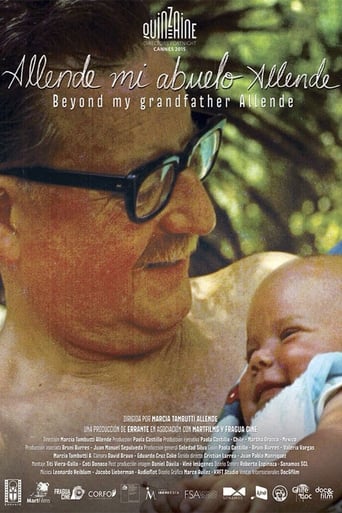
Marcia, granddaughter of Salvador Allende, the first democratic socialist president who was overthrown by the Army in September 1973, seeks to reconstruct the personal and familiar image of her grandfather, buried by his historical person, her exile and the family pain.
During WW2, a group of assembled allied forces are sent to a secret nuclear bunker occupied by Nazi Germany to uncover the operations of what's been occurring there. But when they discover the bunker is infested with rabid, zombie, super-humans in a nuclear testing operation gone wrong, they must destroy every last one in hopes of survival.
August Strindberg's historical play about the king he called Sweden's traitor.
A 2003 BBC television historical documentary presented by Jeremy Clarkson who examines the history of the Victoria Cross, and follows the story of one of the 1,358 men who were awarded it: Major Robert Henry Cain.
This short shows how two objects led to important discoveries. Children playing with a seesaw inspire French physician Rene Laennec to invent the stethoscope, and a pair of shoes made of caoutchouc lead Charles Goodyear to discover the process for vulcanizing rubber.
In February 1945, Jules Ternes returns to Luxembourg. To escape conscription, he fled the country and joined the resistance movement in France. Back in his hometown, Jules hopes to find peace of mind and put the war behind him. But he returns to a country devastated by the Battle of the Bulge and deeply divided from four years of occupation. His sister Mathilde is now engaged to Armand, the leader of the local resistance and his girlfriend Leonie has another man in her life. Jules nevertheless resumes a relationship with her and accepts a post as an auxiliary policeman. When Leonie is assassinated along with the German farmers she works for, the life Jules was struggling to rebuild collapses. The ensuing investigation will reveal grey areas of the Occupation along with the efforts made in high places to cover them up.
Activate your FREE Account!
You must create an account to continue watching