The film is set in Lithuania after the Second World War. It shows dramatic events in a small Lithuanian farming community, where people are split between the Soviets and the "brothers in the woods", who are fighting to defend their land from the Soviets after the end of the Second World War.
This story of the miller Florian, who gave all his money to the war against Napoleon, is loosely based on a true story. After the war, Florian's reimbursement is challenged, and he must also pay taxes on his destroyed mill. He resists the tax collectors and takes off to Vienna, where he intends to defend his rights. On the way, he rescues the Duchess of Guastalla from assault. She also wants to go to Vienna, as His Majesty Franz II is trying to contest an heir in her favor. With cunning, luck, and dagger, Florian fights his way through a slew of nobility and their secret police.
In 1750, in the glare of the Caribbean, the man who created history known as the forerunner of independence in Venezuela. His name is Francisco de Miranda and, to be exact, is the largest globetrotter who has known the Americas, Miranda has a reputation as an inveterate wanderer, an eternal conspirator, a turncoat, a conqueror of nobles and courtiers, a lover of asylums, libraries, prisons and brothels, has written 63 volumes of his autobiography, a friend of princes, military and world-renowned artists, collector of women and unthinkable dreams, restless fugitive, owner of ten different names, and presented by the British press the moment as the future liberator of Spanish America.
An account of the life and work of the charismatic Spanish writer Terenci Moix (1942-2003).
A young filmmaker prepares for the debut of his first feature film.
The life story of Jan Amos Comenius, who became probably the most famous Czech exile due to his beliefs and opinions. He spent most of his life outside his homeland, but nevertheless, with his unique ideas, which he recorded in almost 200 books and writings, he was far ahead of his time and influenced the whole world.
After listening to the waltz "Carmelita", dedicated to his wife, President Diaz instructs Don Susanito seeking the composer Chucho Flores to give her a piano. Don Susanito located Chucho, a bohemian who lives drunk and surrounded by poets and artists. Don Susanito was named patron protector of artists and aspiring young stars of the stage, which leads to a series of adventures in the middle of songs, dances and loves.
We go behind the scenes and into the minds of artists as they capture, commemorate, and, at times, condemn our presidents.
May 1968. Charles de Gaulle is 77. His great career is behind him. Obsessed by France's prestige, he's looking with distance to the student demonstrations. An intimate portrait of the General through the tale of 68'events.
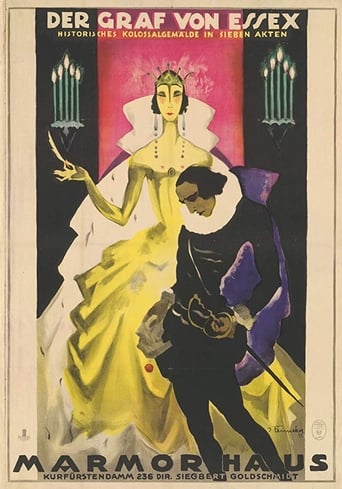
The Earl of Essex, a person favourite of the Queen, is in jeopardy of losing his relationship with the monarch after secretly marrying one of the Queen's ladies-in-waiting.
The ancient Aztec world inadvertantly welcomes its doom in the form of the Conquistadors.
A story of an actor named Oleg whose wife has been seduced by his neighbor. As he is thoroughly convinced of her infidelity, he would like to poison her. An old man named Prokhorov helps him to get rid of his wife by lecturing about famous deaths caused by poisoning. It is from Prokhorov we learn that many famous and not so famous like Cesare Borgia and Caligula were killed as they were poisoned.
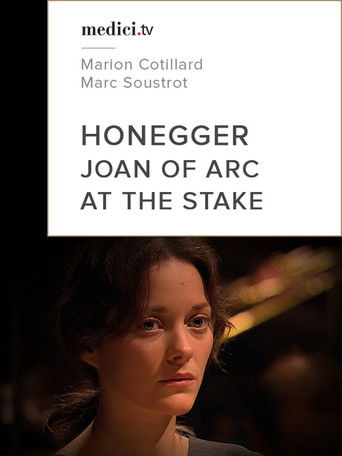
On November 17, 2012, Oscar-winning French actress Marion Cotillard joined the Barcelona Symphony and Catalonia National Orchestra for a performance of Arthur Honegger’s oratorio Joan of Arc at the Stake (Jeanne d'Arc au Bûcher) at the L'Auditori de Barcelona in Spain, broadcast live on Medici.tv. By Swiss composer Arthur Honegger, Jeanne d'Arc au Bûcher (1938) is an imposing oratorio. The libretto is a highly original creation by French poet and playwright Paul Claudel, who dramatises the last moments of the martyr's life. Originally written for actress Ida Rubinstein, the oratorio is written as a flashback in which Joan recalls her life, just before she dies. Honegger creates visually evocative ambiances and fills the orchestra with new sounds (saxophones, ondes Martenot). The initial prologue to the piece was added in 1944 as a symbol of the resistance during the Nazi occupation of France: again, Joan goes beyond her own story.
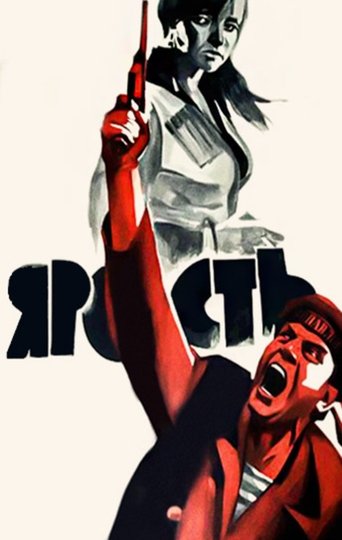
Hearing about the revolution in the hospital, the sailor Gulyavin goes to Petrograd, and from there with a detachment of Ukrainian volunteers he is sent to Ukraine. The troop is joined by cavalrymen under the command of the anarchist Lelka. The chief of staff, Stroyev, reproaches Gulyavin with negligence - you cannot take an untested detachment. However, the desperate courage of Lelka in battle with the White Guards gives Gulyavin not only respect for her, but love...
Helen Castor presents an in depth and insightful series covering England's early Queens, from the High Middle Ages with Eleanor and get daughter-in-law Eleanor of Aquitane, through the Late Middle Ages with Isabella of France and Margaret of Anjou and finishing with Lady Jane Grey, Mary I and Elizabeth I.
Year 1917. Young doctor Valentin Voyno-Yasenetskyj with his wife and four children moved to Tashkent, beset by civil war and intervention. Voyno-Yasenetskyj became head physician in the city hospital. He not only saves hundreds of patients every day, operating under the bullets of the permanent street battles, fighting for his life and life of his beloved wife, dying of TB. In the midst of persecution, he as alone with four children on the outskirts of the former empire, so he decides to become a priest. And since then, he never altered neither scalpel, nor cross, he goes with them through all their hard exiles and arduous life, treating both: body and soul.
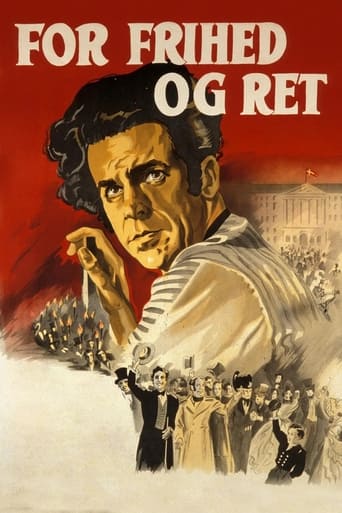
A picture of the life of the Danish people from the late 1820s to the introduction of the free constitution in 1849. A fictional character, Rasmus Nielsen, travels around the country, first as a traveling teacher, later in other positions, and through his experiences we are introduced to the conditions of various population groups. The central figure in the portrayal of historical figures is the politician Orla Lehmann.
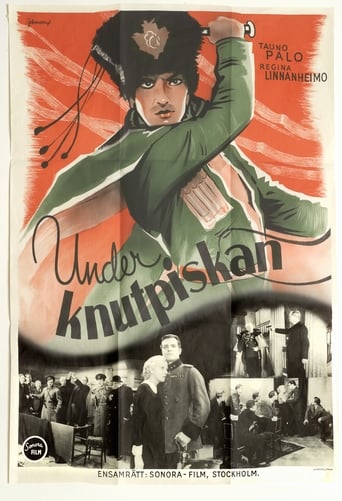
February Manifesto was Yrjö Norta's and Toivo Särkkä's Finnish movie from 1939. It is a Finnish historical drama about developing independency based on book of the writer Mika Waltari. Movie Starring Tauno Palo and Regina Linnanheimo. For it's anti-soviet thematics it was banned in Finland from 1944 to 1987.
Activate your FREE Account!
You must create an account to continue watching