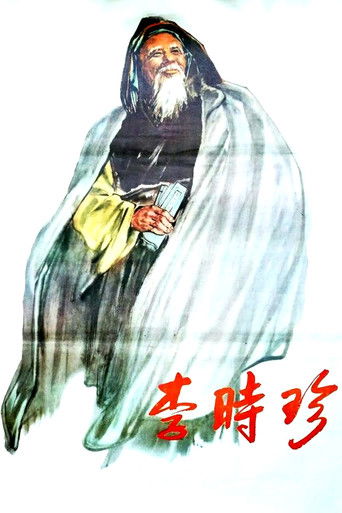
This biography film is based on the life of the real historical figure Li Shizhen.The story focuses on the social injustices suffered by Li as well as the difficulties he overcame in writing the famous Encyclopedia of Herbs.
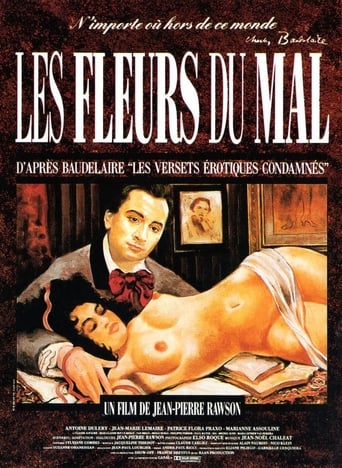
Charles Baudelaire was one of the giants of 19th-century French poetry, and he earned his position among that nation's luminaries through the poems in one slim volume, entitled Les Fleurs du Mal (Flowers of Evil). A perfectionist to the extreme, he struggled with every word of those few poems for many years before he consented to see them published. When he did, six of them were condemned by the state censors as obscene. It was surely a powerful blow to him to have such a significant part of his life's work so rudely suppressed. This courtroom drama follows him at the 1857 trial at which he defended his works. The filmmaker has chosen to symbolically re-enact certain poems about the love of a woman as they are being read for the court. It is easy to imagine that, as was certainly the case for the trial of Oscar Wilde in England, this courtroom trial was a form of punishment for his publicly dissolute lifestyle.
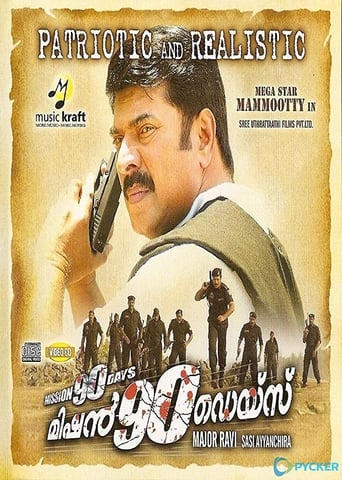
The prime minister of the nation gets killed and an efficient police officer, Sivaraman, gets appointed by the government to solve the murder mystery. He gets ninety days to accomplish the mission.
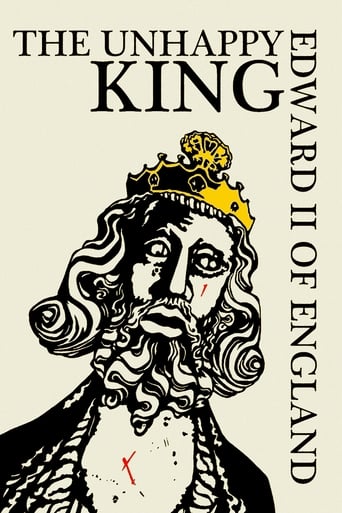
His opponents accused him of being homosexual. The male favorites he gathered around him during his short life gave those malevolent enemies solid arguments to do so. He would not have failed if he had proved himself to be an energetic king. But Edward II of England (1284-1327) never was a king like Edward I Longshanks, his father, or Edward III, his son, were. And his end is shrouded in myth and mystery.
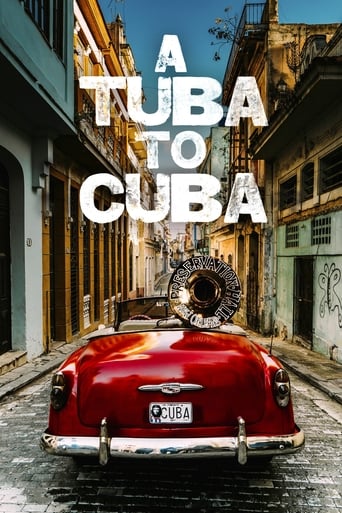
A son seeking to fulfill his late father’s dream takes his band from the storied city of New Orleans to the shores of Cuba, where — through the universal language of music — dark and ancient connections between their peoples reveal the roots of jazz.
A film about the incredible story of Karina Chikitova. In August 2014, a three-year-old girl disappeared, but she was not immediately missed: people assumed she had left with her dad, who lived in a neighboring village. Only on the third day was it revealed that her dad had not picked her up. The village searched for her for 12 days and found her alive, thanks to a faithful friend — a puppy. In honor of Karina and her dog Naida, a monument was erected at the Yakutsk airport, and a book published called "Karina. 12 Days in the Taiga." This story dramatically changed the life of a little girl from a tiny village and her family. Today she is already 12 years old and studying at a ballet school.
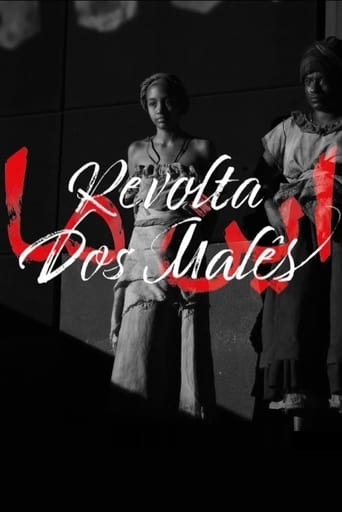
Salvador, Bahia, January 1835. After more than a decade of hard work, Guilhermina, 27, a slave of Muslim origin, finally gets the resources to buy her manumission, as well as that of Teresa, 11, her teenage daughter. But, contrary to an old promise, his “lord”, farmer Souza Velho, refuses to sell the girl's letter. When Pacific Licutan, Salvador's most esteemed Islamic leadership, is arrested by the Bahian authorities, the Muslim community goes into a boiling state and begins to articulate a jihad. In desperation, Guilhermina sees in the uprising the only way to win her daughter's freedom.
At 165 pounds, and allegedly made from the skins of 160 donkeys, the Codex Gigas is the world's largest and most mysterious medieval manuscript. Filled with satanic images and demonic spells, according to legend, the cursed text sprang from a doomed monk's pact with the Devil. Now, Nat Geo follows a team of scientists as they embark on an unprecedented quest to unravel the secrets behind the book's darkened pages. Using ultra-violet fluorescence imaging, handwriting analysis and a re-creation of the text, forensic document experts attempt to uncover the cryptic truth behind this ancient Devil's Bible.
The story of Mary is reinvented, no longer a spectator but a courageous architect of her own existence.
Today, the word "Auschwitz" is a synonym for the Holocaust. Thousands of Jews died there every day. With the help of some acted scenes, photos and graphics, the film tells of a day in May 1944. The starting point is a unique document: a photo album created by the SS perpetrators themselves. Almost all of the photos were taken at the end of May 1944, in just a few days. They show the cruel routine, the arrival of the victims, their "selection" on the ramp, the robbery of their property and the transformation of all those who were not immediately killed, into shaved, uniformed slaves. One survivor is Irina Weiss. On a photo she recognizes her little brothers and her mother - waiting unsuspectingly near the crematorium. The SS photographers captured all of this. Their identity is known today: one of them was Bernhard Walter, a "Stabsscharführer" who lived with his wife and three children near the extermination camp.
In a Mexican city at the end of the 19th century, Don Francisco, a gambler and a bohemian, almost forgets his wedding and is late. The bride, who is pregnant, is sent to Paris by the snubbed family.
The Delano Manongs tells the story of farm labor organizer Larry Itliong and a group of Filipino farm workers who instigated one of the American farm labor movement’s finest hours – The Delano Grape Strike of 1965 that brought about the creation of the United Farm Workers Union (UFW). While the movement is known for Cesar Chavez’s leadership and considered a Chicano movement, Filipinos played a pivotal role. Filipino labor organizer, Larry Itliong, a cigar-chomping union veteran, organized a group of 1500 Filipinos to strike against the grape growers of Delano, California, beginning a collaboration between Filipinos, Chicanos and other ethnic workers that would go on for years.
A musical about the life of F. Scott Fitzgerald. We begin on Dec. 21st, 1940, just moments before Scott dies. The main actor speaks to the audience, asking them what they think he was thinking of, what he was planning. Then he takes us back, for one last party before the end.
Famous recluse J. D. Salinger has hidden from the world since "The Catcher in the Rye" took the world by storm. Banned in schools, and horrifically inspiring the killing of John Lennon, the book had repercussions no one could have foreseen and which seemed to drive the author further into hiding.
Ukraine 1922. The Russian empire has already broken up, but a new state has not yet been formed. Many tried to create and consolidate their independence during this period, and this is the story of one of such people. This is the story of the life and love of one person - Ivan, nicknamed Raven ...
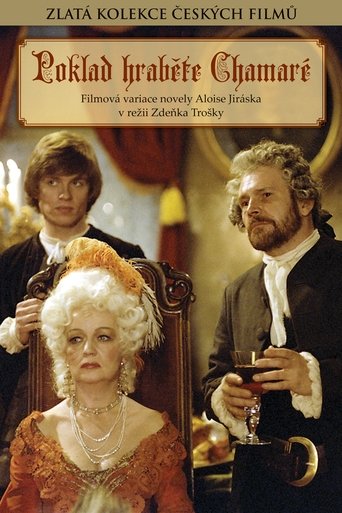
In 1781, Countess Marie Karolina shelters an influential Abbé, a former Jesuit who vehemently opposes progress. Only Dr. Kamenický dares challenge him, restoring the countess’s zest for life. Her husband, obsessed with finding a hidden treasure, neglects the estate and seduces her ward Renáta. Meanwhile, returning exile Václav’s secret reunion with Frantina in cave hideouts is betrayed by jealous suitor Tomáš, who, with the Abbé’s help, unleashes a violent manhunt.
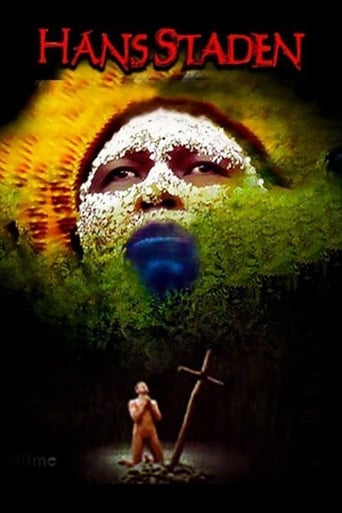
On the eve of his return to Europe after an extended involuntary stay in 16th-century Brazil, the German sailor Hans Staden is captured by a hostile cannibal Indian tribe. In order to survive he tries to convince the Indians that he is not Portuguese (their enemies) but a friend of the French (their allies), and that his God would be very angry if they were to eat him.
This is the story of a thousand-year-old tree, resilient ambassador of Nature and silent witness of History. The lives of men and women slip under its fronds, often unaware of how much their existence depends on its presence. This is the story of s'ozzastru and of the generous and solid land that welcomed it. In 2021 in Sardinia, a thousand-year-old wild olive tree burned. This fire devasted 70.000 acres of land and houses. Thousands of animals died, suffocated or burned alive.A year later, the tree sprouted again, becoming a symbol of resilience. Every year, around the world, 7 millions of acres of land are destroyed in over 60.000 fires, almost all caused by human hand.
A documentary drama retelling the shift of Mitterand's policy. In May 1981, F.Mitterrand is elected President of the Republic, after more than twenty years in the opposition. He wants to change the life; he believes in the supremacy of politics over economics. He wants it to be fast and executes his programme to realise the socialist transformation. Two years later, Pierre Mauroy and Jacques Delors introduce an unprecedented austerity plan and open the parenthesis of austerity... that would never be closed.
Activate your FREE Account!
You must create an account to continue watching