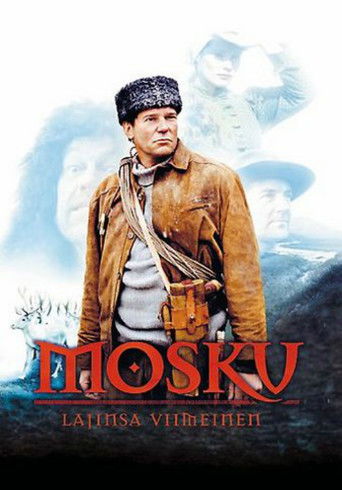
A story about the life of reindeer emperor Mosku in Eastern Lapland at the beginning of the 20th century, when social conditions and the practice of traditional livelihoods are in transition. Mosku is involved in reindeer disputes and skirmishes and is also involved in the bandit hunt on the side of Soviet Russia led by Wallenius, the commander of the Lapland border guard.
In war against the Poles, the leader Cossack sees itself betrayed by one of his threads, been in love the girl of an enemy.
Elected in November 1932, as the economic crisis ravaged the United States, Franklin Delano Roosevelt immediately put all his campaign promises into action: it was time for the "New Deal". This bold plan, designed to turn around a nation on the brink of collapse, where unemployment was at an all-time high and the working poor were suffering from the precariousness of the job market, was intended to give hope to a country that had been battered before anything else. Once he came to power, the new president from the Democratic Party immediately passed some fifteen laws designed to revive the economy.
Throughout the 19th century, imaginative and visionary artists and inventors brought about the advent of a new look, absolutely modern and truly cinematographic, long before the revolutionary invention of the Lumière brothers and the arrival of December 28, 1895, the historic day on which the first cinema performance took place.
Living in Pasteur's private life during his first human experiment with the rabies vaccine, the hidden side of the scientist emerges: a rough yet tender man, a warrior overwhelmed by doubt, a revolutionary willing to do anything to impose on his detractors the incredible discovery that will pave the way for modern medicine.
During the Northern Wei Dynasty, Mulan joined the army for his father and returned with honor. Ten years later, Rouran broke the border again, and Mulan resolutely returned to the battlefield. To save Tuoba, Mulan fell into the enemy. In prison, Mulan saw through Kunpeng's tricks. Kunpeng killed Khan and blamed Mulan. Mulan battled Kunpeng to protect innocent people. The princess pointed out that the real murderer was Kunpeng. Kunpeng was killed in the melee. The chaos subsided. This film celebrates peace and national harmony, and shows that Mulan, as a woman, does not abandon her compatriots, does not abandon her country, and constantly strives for the outstanding quality and family feelings.
The third film of the film trilogy ("Personally known", "Emergency assignment", "Kamo's Last Feat") about the Bolshevik revolutionary S.A.Ter-Petrosyan, known as Kamo (1882-1922).
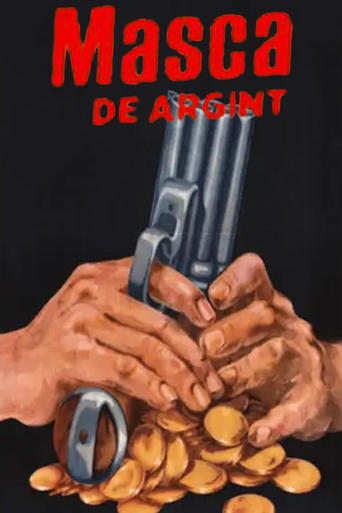
Agatha Slatineanu, together with the alleged banker Troianoff, rob the boyar Valcu of a treasure collected in order to buy the throne. However, the gold is recovered by Margelatu for the benefit of the "Brotherhood".
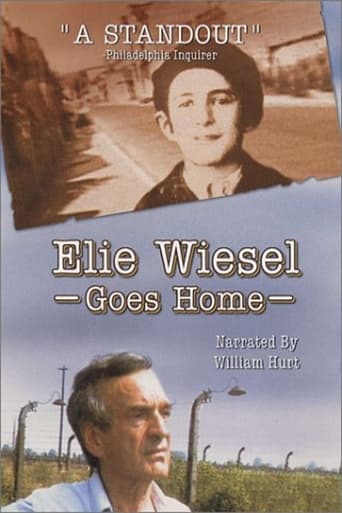
A documentary chronicling the adolescent years of Elie Wiesel and the history of his sufferings. Eliezer was fifteen when Fascism brutally altered his life forever. Fifty years later, he returns to Sighetu Marmatiei, the town where he was born, to walk the painful road of remembrance - but is it possible to speak of the unspeakable? Or does Auschwitz lie beyond the capacity of any human language - the place where words and stories run out?
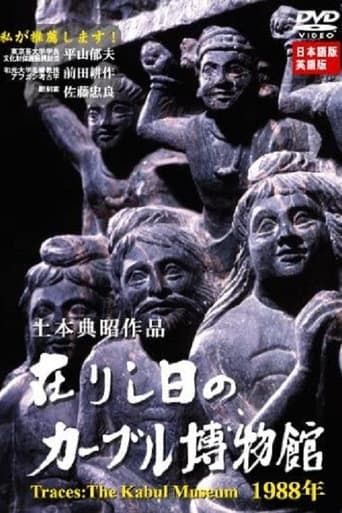
The Kabul National Museum, once known as the "face of Afghanistan," was destroyed in 1993. We filmed the most important cultural treasures of the still-intact museum in 1988: ancient Greco-Roman art and antiquitied of Hellenistic civilization, as well as Buddhist sculpture that was said to have mythology--the art of Gandhara, Bamiyan, and Shotorak among them. After the fall of the Democratic Republic of Afghanistan in 1992, some seventy percent of the contents of the museum was destroyed, stolen, or smuggled overseas to Japan and other countries. The movement to return these items is also touched upon. The footage in this video represents that only film documentation of the Kabul Museum ever made.
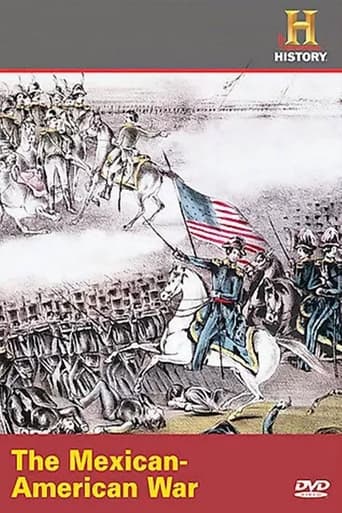
One of the most controversial conflicts in U.S. history, the Mexican-American War erupted as President James K. Polk sought to extend the borders of the nation to the Pacific, taking by force whatever territory stood in the way. This special, produced by The History Channel and hosted by Oscar de la Hoya, looks at the war from the perspective of both countries, and chronicles the fighting from its inception to its conclusion with the Treaty of Guadalupe Hidalgo.
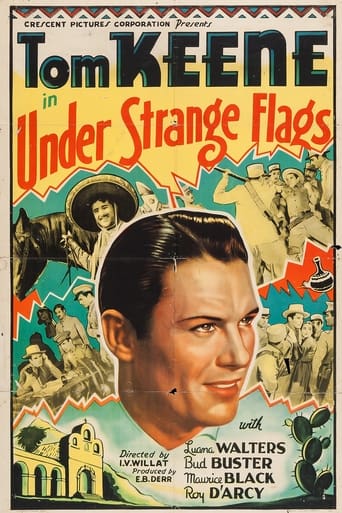
Not quite a western, not quite a historical drama, Under Strange Flags is a little bit of both, and a lot of former RKO Radio cowboy hero Tom Keene. The star is cast as Tom Kenyon, a roving adventurer in Mexico during the Revolution. Hoping to protect the silver mine owned by heroine Dolores De Vargas (Luana Walters), Tom receives unexpected assistance from none other than rebel leader Pancho Villa (Maurice Black).
Directed by Peter Casaer and narrated by Daniel Day-Lewis, this documentary provides a harrowing look at the challenges of delivering humanitarian aid in armed conflicts. “Access to the Danger Zone” explores the strategies that Doctors Without Borders has employed to save lives in the world’s worst war zones, including Afghanistan, Somalia, and eastern Democratic Republic of Congo—strategies that are tested each and every day. Interviews with key experts from Doctors Without Borders, the International Committee of the Red Cross, and the United Nations are accompanied by dramatic footage shot in these countries in 2011 and 2012.
On July 14, 1789, a mob of angry Parisians stormed the Bastille and seized the King's military stores. A decade of idealism, war, murder, and carnage followed, bringing about the end of feudalism and the rise of equality and a new world order. The French Revolution is a definitive feature-length documentary that encapsulates this heady (and often headless) period in Western civilization. With dramatic reenactments, illustrations, and paintings from the era, plus revealing accounts from journals and expert commentary from historians, The French Revolution vividly unfurls in a maelstrom of violence, discontent, and fundamental change. King Louis XVI, Marie Antoinette, Maximilien Robespierre, and Napoleon Bonaparte lead a cast of thousands in this essential program from THE HISTORY CHANNEL®. Narrated by Edward Herrmann (The Aviator, Gilmore Girls), The French Revolution explores the legacy that--now more than ever--stands as both a warning and a guidepost to a new millennium
"Titanic - Anatomy of a Disaster" is an original Discovery Channel production that looks into not only the history but the mystery surrounding the sinking of Britain's most luxurious passenger liner. This investigation, narrated by Martin Sheen, shows a research and recovery expedition that uses science to piece together the final hours of the Titanic: Discovery Channel has assembled a unique investigative team of oceanologists, marine engineers, archaeologists, microbiologists, metallurgists, engineers, writers, historians and movie makers to uncover the truth about one of history's greatest disasters.
Neglected by his father, William, a star college hockey player, also suffered harassment from his coach and some teammates. By chance of a visit to Sainte-Justine hospital, the young man, whose morale and motivation are at its lowest, meets ten-year-old Daniel, awaiting a kidney transplant. Their passion for the Habs unites them instantly and William tries, by all means, to give him hope in the face of the disease.
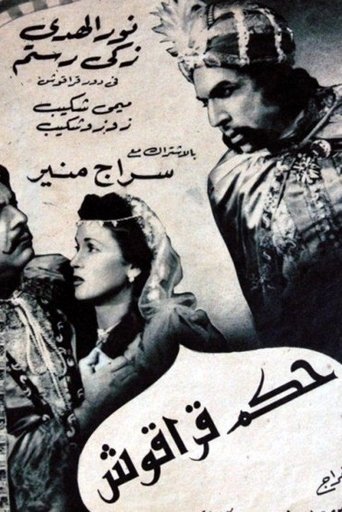
The heart of Governor Qaraqosh (Zaki Rustom) is tied to the heart of the girl (Nour Al-Huda), a girl from the common people, so he decided to appoint her father (Siraj Munir) as prime minister so that he could marry her. (Siraj Munir) takes advantage of his ministerial position and the people’s love for him to redress grievances. And tyranny against people, and at the same time (Nour Al-Huda) relates to the love of one of the young men who decides to revolution.
The plot is based on the creation of an illegal Marxist printing house in Chisinau in 1901, which reprinted the newspaper Iskra and other underground literature.
The future communist journalist Julius Fučík had a stimulating childhood and youth in a working-class environment, when his moral maturity was already showing. The authors of the film recall that the young Julek was a star of the suburban operetta scene, and in three episodes they depict him both in his early childhood and already at the gymnasium, when the outbreak of the World War shaped his determination.
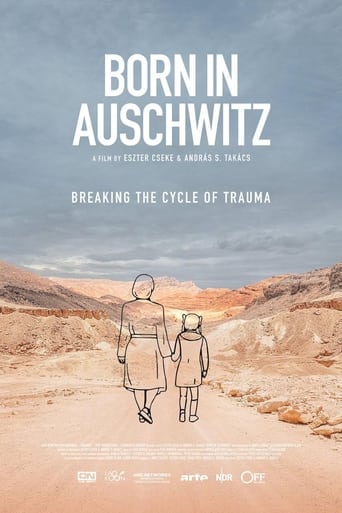
The untold story of a Jewish baby who was born in the death camp before the liberation and survived. An extraordinary journey of the second and third generation, breaking the cycle of trauma to free themselves from Auschwitz - forever.
Activate your FREE Account!
You must create an account to continue watching