Louis Pasteur and Robert Koch: great scientists, national icons, opponents in the service of research. One is a Frenchman and chemist and is already in the second half of his life. He is honored worldwide with numerous prizes for his discovery of the rabies vaccine. The other was a still unknown German country doctor in his 30s, whose discovery of the tuberculosis bacillus was later awarded the Nobel Prize for Medicine. From 1881, the two were bitter rivals. Their 20-year rivalry resulted in spectacular progress in the fight against deadly epidemics.
The collection of TV series based on Albert Maltsa’s stories. Action happens at the time of the Great depression.
NOTHING IS TRUER THAN TRUTH is a feature length documentary about Edward de Vere, Seventeenth Earl of Oxford, A-list party boy on the continental circuit, who spent a year and a half in Venice and traveling in Europe, learning about commedia dell'arte and collecting the experiences that would become the Shakespeare plays. Shot in Venice, Verona, Mantua, Padua, and Brenta, the film ventures to actual sites De Vere visited in 1575-76, including the settings for THE MERCHANT OF VENICE, OTHELLO, ROMEO & JULIET, and TWO GENTLEMEN OF VERONA. The film features renowned Shakespeare scholars, actors, and directors, including Sir Derek Jacobi, Mark Rylance, Tina Packer, and Diane Paulus, and argues that De Vere's bisexuality is the reason for the pseudonym Shake-speare.
In the Bavaria of the 1980s, a father and his son compare their respective views on a family past heavy with resentment and unsaid.
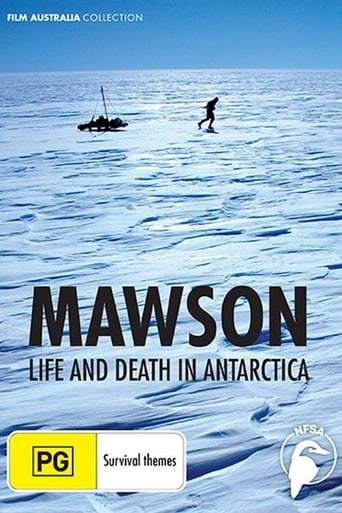
The Douglas Mawson Antarctic Expedition of 1912 is considered one of the most amazing feats of endurance of all time. Although his two companions perished, Douglas Mawson survived, but how? In a bold historical experiment, scientist and adventurer Tim Jarvis is retracing the gruelling experience, with the same meagre rations, primitive clothing and equipment to uncover what happened to Mawson physically — and mentally — as a man hanging on the precipice of life and death.
In 1948, Albert Gemmeker, the former commander of the Dutch concentration camp Westerbork, finds himself in an interrogation room opposite a man unknown to him. It soon turns out that Gemmeker's interrogator has a personal reason to force him to confess about his war past and the transportation of 80.000 Jews to the extermination camps.
To celebrate its 250th anniversary, this documentary tells the story of one of the world’s greatest museums, from its foundation by Catherine the Great, though to its status today as a breathtakingly beautiful complex which includes the Winter Palace. Showcasing a vast collection of the world’s greatest artworks together with contemporary art galleries and exhibitions, it holds over 3 million treasures and world class masterpieces in stunning architectural settings. This is its journey from Imperial Palace to State Museum, encompassing a sometimes troubled past, surviving both the Revolution in 1916 and the siege of Leningrad by the Nazis in 1941-44.
The documentary play reconstructs the backstory of the so-called “Röhm Putsch”, during which a few hundred people got killed, depicts the intrigues between the Reichswehr (German army) and the SA, and draws an image of the character of Röhm who, prior to Hitler’s accession to power, was his friend but later got pushed more and more into the background and eventually was disposed of. Röhm, captain during the 1st World War, organisational talent, daredevil, and one of the ‘discoverers’ of the corporal Hitler, was the central figure in the secret power struggles in the just established Hitler state. He demanded a ’second revolution’ and wanted to unite the million-man army of the SA and the Reichswehr under his leadership…
After the death of Octavian, the rebel populations of Illyria and Pannonia pose a grave threat to the Roman Empire. Tribune Marcus Ventidius is sent to subdue the uprising and, after a bitter battle, captures Pannonian chief Magdus together with a number of women hostages. These include Magdus's own daughter Helen, betrothed to cruel Illyrian warrior Batone who has killed many Romans. Julia, daughter of the Roman governor Messala, is in love with Tribune Marcus and, jealous of his sympathy for the barbarian girl, plots an escape by Helen and her father. Pursuing the fugitives, Marcus crosses a mountain pass where Batone has laid a trap.
This richly illustrated historical documentary investigates the mechanism of nationalist feelings that radicalise. It shows how fascism was on the rise even a decade before the founding of the NSB, due to a number of anti-democratic initiatives led by a millionaire with a predilection for one-legged women, a market vendor, a cleric, and an artist. Historians, writers and collectors of fascist curios reveal how an initially marginal and fragmented movement grew into a radical populist party.
The second chapter of director Ismael Rodríguez's series about Pancho Villa. Several stories about the life and death of the famous mexican revolutionary general.
Egaro celebrates the centenary of the historical football match between Mohun Bagan and East Yorkshire Regiment for the IFA Shield where Bagan snatched the shield on 29 July 1911 during a time when India was under British rule.
An adaptation of the Hindu religious book Bhagavat Gita, an epic centering around two families and their fight for the throne.
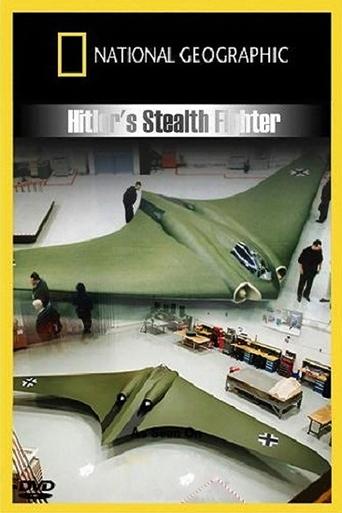
In the final months of World War II, American troops discovered a top-secret facility in Germany with an advanced batwing-shaped jet fighter. If Nazi engineers had had more time, would this jet have ultimately changed the outcome of the war? In this National Geographic documentary they rebuild a jet discovered in a top-secret German facility during the final months of World War II - the Horten 229.
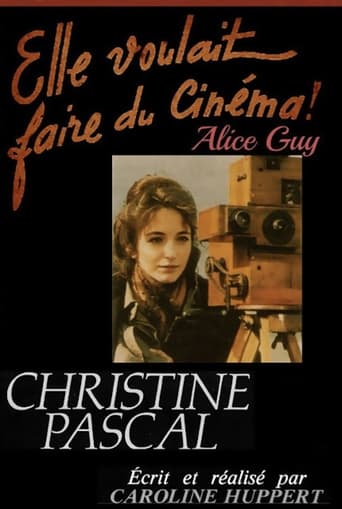
Biopic of French film pioneer Alice Guy-Blaché, considered the world's first female director, who directed, produced and/or supervised over 700 films between 1896 an the 1920s, in France and, for a period, in the US.
During the war, on the banks of the Garonne, there is a café, the Café du Pont, where workers and sailors gather. Ten-year-old Pierrot's parents dedicate all their time and energy to the place. The German Occupation imposes restrictions and fear, but Pierrot knows that his father discreetly carries out brave actions and that his mother, both strong and fragile, knows how to settle any conflict - in her own way.
The story deals with the life of Kim Gu, who dedicated his life for the good of his country and people.
A frustrated postman decides to fool innocent villagers in a ploy to get himself transferred. As he walks uphill to deliver his last letter, a wayfarer narrates to him the story of a Harkara, that instills guilt.
For the first time, you will see dramatic moments of WWII that were captured in 3D with stereographs and then shuttered away in secret archives and attics, until now. This stunning collection of color 3D photos includes Allied reconnaissance photos, a trove of images that documents the rise and fall of the Third Reich, and photos secretly taken by a civilian in occupied France. WWII IN 3D also features an actual 3D motion picture film shot by the Nazis in 1943 and creates a fully immersive, three dimensional portrait of history's largest and bloodiest conflict.
French writer Jean-Claude Carrière (1931-2021) traces the life and work of Spanish painter Francisco de Goya (1746-1828).
Activate your FREE Account!
You must create an account to continue watching