Historical satire from the first half of the 19th century, which captures the decay and decline of the landed estate. The impoverished peasants still seem to adhere to the old principles of peasant honor and glory, but the elections will show how easy it is to buy knightly qualities.
A graduate history student returns to her native Newfoundland, searching for proof of a conspiracy surrounding the referendum that saw Newfoundland join Canada.
Komboodhi is the leader of a tribe that steals from the rich to survive. He befriends Varipuli, unaware of his past, only to learn that his village has been hunting him to offer his life to god.
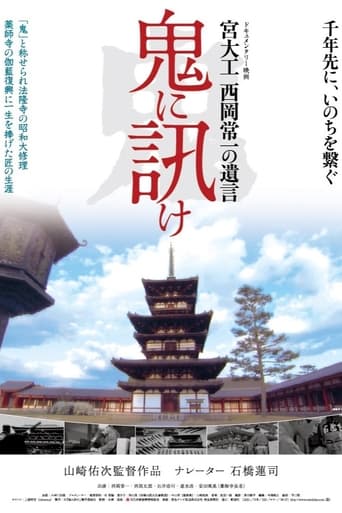
In-depth look at the twilight years, spent training apprentices, of temple builder Nishioka Tsunekazu, who was called the "devil" as he devoted his life to temple architecture. His insistence on the gargantuan timescale of linking life to the next millennium emerges from people who knew him. Remarkable as well for showing the unknown backstage of temple architecture. Nishioka, known as "the last temple carpenter," handled the major Showa-era repairs of Horyuji temple, and in 1990 was at the scene of the reconstruction work for Yakushi temple.
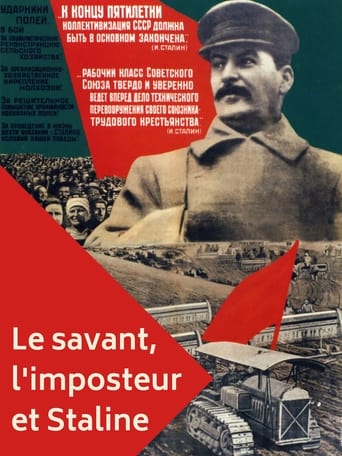
The documentary tells two very different human fates in the 1920s Soviet Union. Nikolai Vavilov was a botanical genius, Trofim Lyssenko was an agronomist who made great promises and fake inventions. Each of them tried to solve the country's nutritional problem, but only one succeeded.
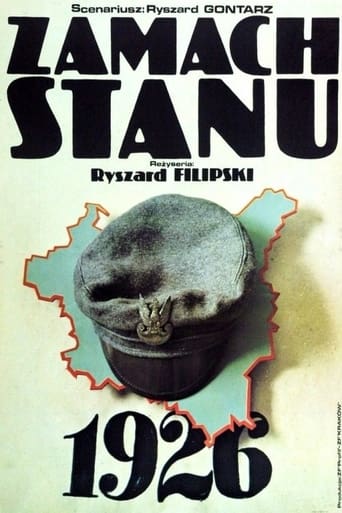
Fall 1925. Six hundred officers demonstrate in front of Józef Piłsudski’s country house in Sulejówek, demanding the Marshal’s return to active political life. May 1926—a government crisis; Wincenty Witos forms a new government. Piłsudski’s move sparks clashes between supporters and opponents of the ousted government. Piłsudski appoints Kazimierz Bartel as prime minister. The beginning of the “moral reform.” Ignacy Mościcki becomes president. Summer 1930. A joint platform of opponents to the Sanacja government is formed. “Centrolew” is established.
Made famous by the 1957 Hollywood movie, the bridges of the River Kwai emblematize one of the most misunderstood events in history. Contrary to the romanticized film version, the structures represent a period of terror, desperation, and death for over 16,000 POWs and 100,00 local slaves. The Thailand - Burma Railway was the vision of the Japanese Imperial Army: a 250-mile track cut through dense jungle that would connect Bangkok and Rangoon. To accomplish this nearly impossible feat, the fanatical and ruthless Japanese engineers used POWs and local slaves as manpower. Candid interviews with men who lived through the atrocity - including Dutch, Australian, British, and American POWs - illuminate the violence and horror of their three-and-a-half-year internment. From Britain's surrender of Singapore the enduring force of friendship, The True Story Of The Bridge On The River Kwai narrates a moving and unforgettable account of a period in history that must be remembered.
British legend Adrian Street reflects on his life and career in and out of the ring.
20s south of Kyrgyzstan. Platoon commander Abysh Isaev arrives at the military garrison. His task, together with the red commander Valentin Ugryumov, is to stop the bloodshed and destruction perpetrated by Shaanazar’s Basmach detachment, and to return the farmers to their homes.
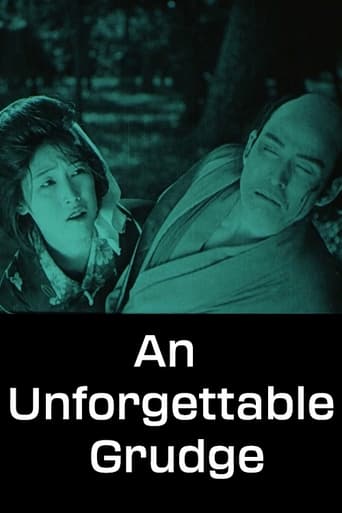
Set in the Edo period, the film deals with two brothers falling in love with the same girl. Sadly, only 12 minutes of footage survive.
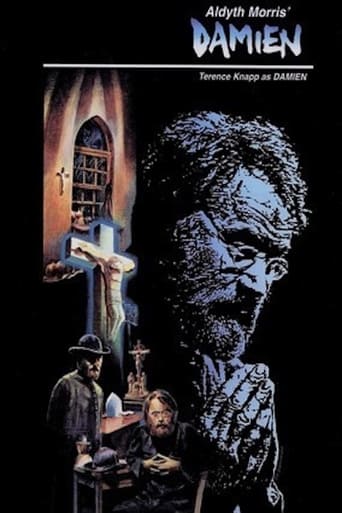
Terence Knapp plays Father Damien in this TV adaptation of the stage play. Damien goes to Hawaii in the late 1800s to care for lepers. Now deceased from leprosy, Father Damien appears as a spirit recounting his life as his funeral procession is carried out.
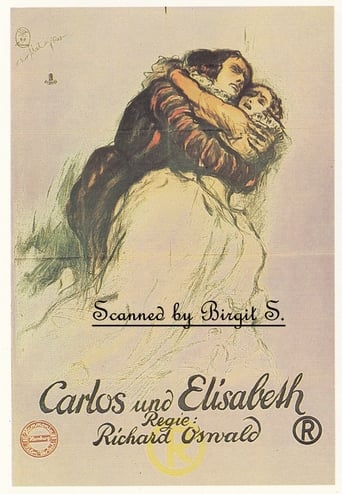
Don Carlos, heir to the Spanish throne, and Princess Elisabeth of Valois are deeply in love but King Philip, Carlos's father, wants Elisabeth for himself.
During the Sino-Japanese War, Tsui-Ying flees with her father from the Japanese occupation. She meets a young man, Ling-Yun, and falls in love. Yet Tsui-Ying chooses to leave Ling-Yun and marries his uncle, a traitor who serves the Japanese. Out of heartbreak, Ling-Yun leaves the country to study abroad. In the meantime, Special Agent 001 leads the resistance against the Japanese. After Ling-Yun returns to Shanghai from the UK, he is surprised to find out his ex-lover has become the wife of his uncle Chao-Chun. Special Agent 001 continues their sabotage and the identify of the agent finally is revealed. The first Taiwanese-language spy film produced in Taiwan, The Best Secret Agent is a remake of the 1945 movie of the same name that caused a sensation in Shanghai.
Inspired by the true story of navigator Yves Parlier who in 2000 set sail in a round-the-world, no-stopover solo sailing race, the perfect opportunity for him to rise to the heights of his childhood heroes. As he launches for the race of his life, Parlier is far from suspecting that he is embarking on a completely different adventure: an incredible test of endurance and survival.
1895 is a picture about the life of brothers Auguste and Louis Lumiere, who have immortalized their names as inventors of cinematography. What inspired them?
Filmed on location in Saskatchewan from the Qu'Appelle Valley to Hudson Bay, the documentary traces the filmmaker's quest for her Native foremothers in spite of the reluctance to speak about Native roots on the part of her relatives. The film articulates Métis women's experience with racism in both current and historical context, and examines the forces that pushed them into the shadows.
In 1968, John Weiley shot 'Autopsy on a Dream' - a film about the Sydney Opera House detailing its construction process and the politics of Jorn Utzon's dismissal. Weiley's film was controversial; it was screened once and then he was told it had been destroyed. Forty five years later a copy was discovered in the BBC vaults by an ABC producer looking for archive footage of the Opera House. Weiley was contacted and told about a film that had no sound track. Weiley was overjoyed; for years he had kept the original sound. So began the painstaking process of restoring this record of a unique moment in Australian culture to its former glory, complete with updated voice-over from the original narrator, Bob Ellis. It is set in context by a 30 minute prologue entitled 'The Dream of Perfection'. Made by the same filmmaker, John Weiley, forty-five years on, 'Dream of Perfection' tells the story of the 1968 film - from commission to destruction, to surprise resurrection.
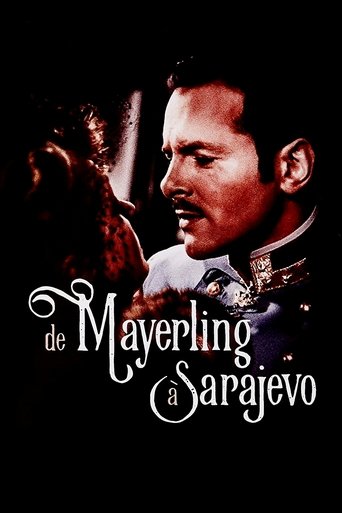
Franz Ferdinand, heir to the throne of Austria-Hungary, is kept absent from the royal court due to his dangerous political ideas. Sent on a tour of inspections and inaugurations, he falls in love with Countess Sophie Chotek.
Activate your FREE Account!
You must create an account to continue watching