Not The Messiah (He's a Very Naughty Boy) is a comic oratorio based on Monty Python's Life of Brian, which retells the tragic tale of Mandy, impregnated by a Roman soldier, giving birth to Brian, a reluctant revolutionary of the People's Front of Judea who falls in love with Judith, gets mistaken for a Messiah and is arrested by the Romans and sentenced to be crucified. It ranges in reference from Handel, through a naughty Mozart duet, to the Festival of Nine Carols, Bob Dylan, and the classic finale "Always Look on the Bright Side of Life".
Using never-before-seen archival footage, personal photos, first-person narratives, and cutting-edge, mouth-watering food cinematography, the film traces Julia Child's surprising path, from her struggles to create and publish the revolutionary Mastering the Art of French Cooking (1961) which has sold more than 2.5 million copies to date, to her empowering story of a woman who found fame in her 50s, and her calling as an unlikely television sensation.
The film is inspired by the record-breaking solo trip around the globe in a hot-air balloon made by the world-famous Russian explorer Fedor Konyukhov in July of 2016. Throughout his remarkable life, Konyukhov has proven time and time again that willpower, perseverance and faith can help overcome fear and doubt, and lead a person to triumph.
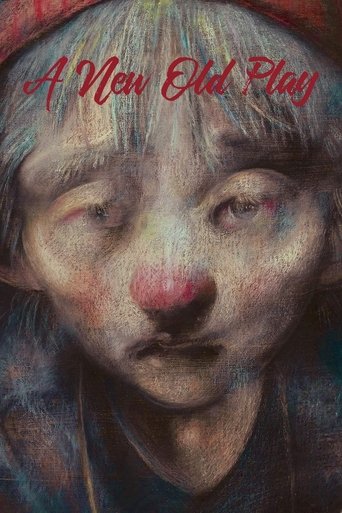
On a 1980s evening, the topmost clown-actor of the 20th century Sichuan opera, Qiu Fu passes away in an accident and half-unwillingly sets off for the Ghost City under the escort of two underworld officials. Along the way, he meets old friends. As they recall the past, a history of the living is conjured up.
Parisian authorities clash with the Front de Libération Nationale (FLN) in director Alain Tasma’s recounting of one of the darkest moments of the Algerian War of Independence. As the war wound to a close and violence persisted in the streets of Paris, the FLN and its supporters adopted the tactic of murdering French policemen in hopes of forcing a withdrawal. When French law enforcement retaliated by brutalizing Algerians and imposing a strict curfew, the FLN organizes a peaceful demonstration that drew over 11,000 supporters, resulting in an order from the Paris police chief to take brutal countermeasures. Told through the eyes of both French policemen as well as Algerian protestors, Tasma’s film attempts to get to the root of the tragedy by presenting both sides of the story.
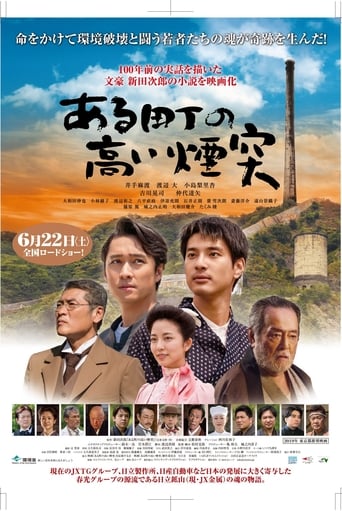
Japan in 1910, industrialization is unstoppable and devastating entire areas in the name of progress. In X, a farming village in Ibaraki Prefecture, the environment is so polluted that the plants in the fields die and the air, which is laden with toxic smoke, can no longer be breathed. But Saburo, the grandson of the village elder, can no longer put up with this and forms the resistance of the villagers. In Junpei, the idealistic employee of Hitachi, he finds an unexpected ally, and together they fight for a way to save the village.
While she fights a heroic battle against the Spanish besieger with her female army, Kenau, driven by hate and sorrow of the execution of her youngest daughter, is threatened to also lose her eldest daughter, because her fear and pain are covered by her stubborn closeness.
A biographical drama is based on the 1929 autobiography of Swedish doctor Axel Martin Fredrik, The Story of San Michele. It follows the physician, psychiatrist, and adventurer as he travels the distances from Lapland to his Villa San Michele on Capri, with special stops in Paris and Rome. Personal physician to Queen Victoria, also physician to the Swedish royal family (he spent his last years living in the Royal Palace in Sweden), "Axel Munthe" knew everyone from the poorest clients to the most well-endowed. His love of animals, his support of bird sanctuaries, his involvement with architecture as he constructs his impressive villa throughout five summers, and his interests in archaeology and hypnotism are all explored.
A young master, Vladimir Dubrovsky, comes to the estate to visit his father, who has long been in litigation with his neighbor, the despotic landowner Troekurov. Having seriously insulted Dubrovsky Sr., Troekurov tries to go to peace, but the proud old man is adamant.
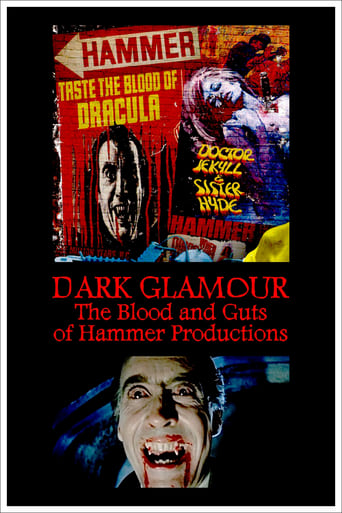
The greatness, fall and renaissance of Hammer, the flagship company of British popular cinema, mainly from 1955 to 1968. Tortured women and sadistic monsters populated oppressive scenarios in provocative productions that shocked censorship and disgusted critics but fascinated the public. Movies in which horror was shown in offensive colors: dreadful stories, told without prejudices, that offered fear, blood, sex and stunning performances.
Director William A. Wellman adds another to his long line of salutes-to-aviation films in this bio of an aviation pioneer, John Montgomery (Glenn Ford.) In 1883 he built a practical glider despite the opposition of his friends, who thought he was crazy, and of his family, who were afraid that his dreams of flying would hurt his father's political ambitions. He pursues his education at Santa Clara University where the Jesuits lend a helping and understanding hand. An earthquake destroys what appears to be a working model for an airplane, but a gold-sorting machine Montgomery invented, and then neglected, promises to provide for his financial needs to keep working on his aircraft until he gets involved in costly lawsuits defending his invention.
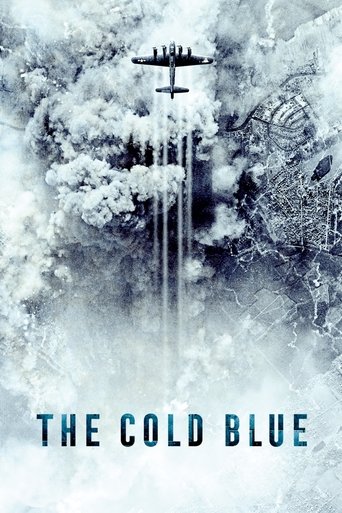
A meditation on youth, war and stunning bravery, featuring footage, taken from the National Archives, from the documentary filmed in 1943 by legendary Hollywood director William Wyler about the famous Memphis Belle flying fortress and the gripping narration from some of the last surviving B-17 pilots.
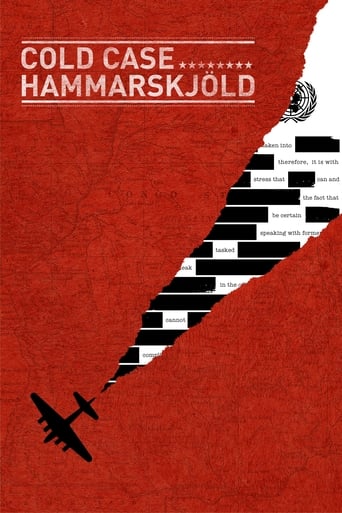
Ndola, Northern Rhodesia (currently Zambia), September 18, 1961. Swedish economist and diplomat Dag Hammarskjöld, Secretary General of the UN, dies mysteriously in a plane crash. Decades later, Danish journalist and filmmaker Mads Brügger and Swedish researcher Göran Björkdahl investigate the case in search of definitive closure.
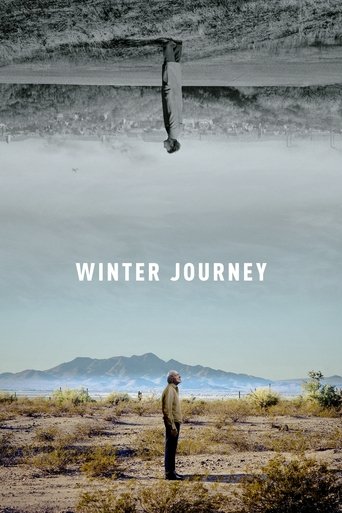
Tucson, Arizona, September 1996. At the request of his son Martin, George Goldsmith tells him of his past in Nazi Germany as a member of a family of Jewish musicians and the strange history of the Jüdischer Kulturbund, a Jewish organization sponsored by Reichsminister Joseph Goebbels.
The story of the making of The Bell Jar, the unique, semi-autobiographical novel written by American writer Sylvia Plath (1932-63), published in February 1963, shortly before her death.
It is a time when Rome rules the world with the power of life and death in their hands. The province of Roman Palestine is a bubbling cauldron of rebellion and control. And on this greater canvas Luke, narrates a story of wonder, amazement and impact... The world is anticipating this moment in history but no one can imagine God touching His creation in the form of a little baby named Jesus. Much is recorded in the Gospels about Jesus' miraculous birth, to a young virgin named Mary, in Bethlehem, but little is known about his quiet growing up in Nazareth. Joseph, his adopted father, seems to have died well before Jesus turns 30 and begins his ministry.
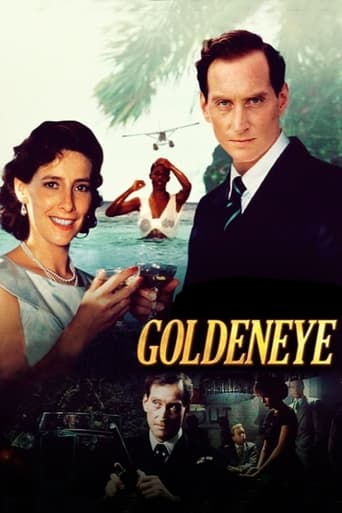
British writer Ian Fleming's life and loves suggest that of his spy-novel hero, secret agent James Bond.
Calcutta, 1946. Violence rages in India. Sister Teresa teaches at a convent, but is haunted by the faces of the starving, the poor and the homeless; the faces of those less fortunate than her. With only her faith in God, she leaves the convent to live in the slums and care for the poor. An surprisingly, even one of the most revered, selfless heroes questioned her purpose.
A young ordinary communist, Vasiliy Gubanov, was among many who took part in the construction of the most important facility for the young republic, the power plant. He did his job in a way that was beyond human ability. He could love, too, with a passion and a passion for self, but his life was cut short very early.
British explorer Henry Stanley travels to Africa in 1871 seeking missionary David Livingstone.
Activate your FREE Account!
You must create an account to continue watching