The Black Prince follows the story of the last Sikh Maharaja — the son of the powerful ruler Ranjit Singh — who was placed on the throne at the age of five, after the death of his father. In 1849, the young prince was removed from the throne and eventually sent off to England. His attempts to return to India and reclaim his kingdom were subsequently thwarted by the British.
A young woman named Savannah Knoop spends six years pretending to be a transgender writer named JT Leroy, the made-up literary persona of her sister-in-law.
The film depicts events between the Fashoda crisis in 1898 and the 1904 signing of the Entente Cordiale creating an alliance between Britain and France and ending their historic rivalry. It was based on the book King Edward VII and His Times by André Maurois. It was made with an eye to its propaganda value, following the Munich Agreement of September 1938 and in anticipation of the outbreak of a Second World War which would test the bonds between Britain and France in a conflict with Nazi Germany.
Meryl Streep conducts us to a trip to New York City as presented in many films during the 20th Century, and how its cultural importance and impact are important to viewers. With a comprehensive gathering of clips from films between 1910's and 1990's, the documentary presents the mandatory classic films that presented the city and its multiple cultural variations, situations and the great stories filmed there. Actors and directors also discuss how they view the city in reality and also through the pictures.
An elder C.S. Lewis looks back on his remarkable journey from hard-boiled atheist to the most renowned Christian writer of the past century.
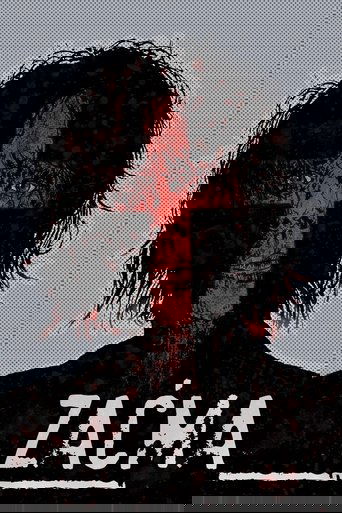
A little known episode from the life of Stalinist security police office Julia Brystiger. Her nickname Bloody Luna was a reference to her incredibly brutal methods of interrogation. In the early 1960s, she appears in a centre for the blind on the outskirts of Warsaw, a place often visited by Cardinal Wyszyński, whose imprisonment in 1953-1956 Brystiger supervised personally. During a difficult and heated discussion with the cardinal, Brystiger denounces the communist ideology and begs for forgiveness for her crimes and for guidance in her search for God.
France, 1897. Colonel Georges Picquart challenges the French government when he discovers the obscure political maneuvers that led to the imprisonment of the Jewish Captain Alfred Dreyfus after being convicted of espionage in 1894.
The war burst into the peaceful life of three friends suddenly, forever changing their destinies. Each of them went to the front, leaving the most valuable things at home in order to fight for this most valuable thing. Surprisingly, they are helped to survive in this fiery hell of battles with fascism, music. Taking musical instruments with them, friends play to maintain the morale of fellow soldiers, as well as to compose the leitmotif of Victory so desired by all.
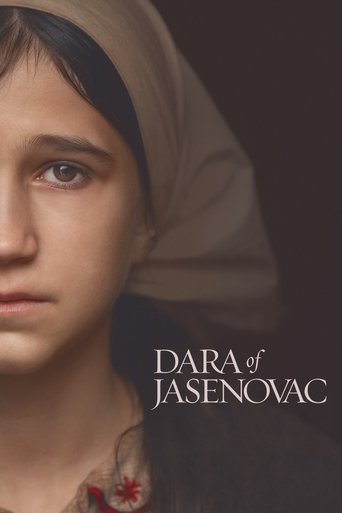
During the Nazi-occupied Ustasha regime "NDH" in former Yugoslavia during WWII, little girl Dara is sent to the concentration camp complex Jasenovac in Croatia also known as "Balkan's Auschwitz".
Indu’s husband, a government employee, believes in using the state of Emergency to advance his career, but a moral and ideological discrepancy sets her on a own path.
Djamila, a young Algerian woman living with her brother Hadi and her uncle Mustafa in the Casbah district of Algiers under the French occupation of Algeria, sees the full extent of injustice, tyranny and cruelty on his compatriots by French soldiers. Jamila's nationalist spirit will be strengthened when French forces invade her university to arrest her classmate Amina who commits suicide by ingesting poison. Shortly after the prominent Algerian guerrilla leader Youssef takes refuge with her, she realizes that her uncle Mustafa is part of this network of anti-colonial rebel fighters. Her uncle linked her to the National Liberation Front (FLN). A series of events illustrate Jamila's participation in resistance operations against the occupier before she was finally captured and tortured. Finally, despite the efforts of her French lawyer, Jamila is sentenced to death...
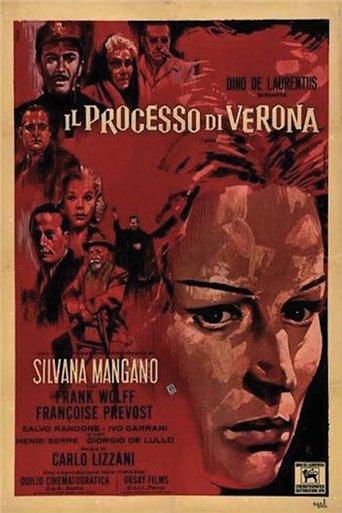
This film is the moving story of Edda Ciano, the daughter of Italian dictator Mussolini, who was unable to prevent the atrocious assassination of her husband by fanatics of her father.
The film follows two student cinematographers who, as the war approaches Moscow, refuse to be evacuated and instead volunteer to be front-line cameramen capturing the horrors of war and heroism of the soviet soldiers. At the same time, we witness another storyline taking place in the US. After the premiere screening of the already completed documentary “Moscow Strikes Back”, one of the members of the Academy Awards selection committee is trying to persuade his fellow colleagues to establish a new category of Best Documentary in the upcoming Oscars event.
Set in the 1800s when Napoleon’s French ruled Europe, the film follows young Austrian carpenter Franz and his Bavarian wife, Katharina as an unforeseen event forces them to flee from Augsburg, Bavaria for Franz’s family home in Tyrol, Austria. Tyrolian sentiment is rising strongly against Napoleon and trouble is stirring. In no time it sweeps up Franz and his brothers along with the whole town.
The true-life, stranger-than-fiction tale of eighteenth-century Greek pirate turned merchant Ioannis Varvakis, who rose from humble beginnings to become the head of one of the largest mercantile empires in Europe.
Katowice, the night of December 12-13, 1981. Military units occupy strategic points in the city. A group of Zomovniks, smashing union security, drags the chairman of the Company Commission of the NSZZ Solidarity in the Wujek mine out of his apartment. The news quickly spreads to the miners. Initially surprised, they soon react with spontaneous protest. On December 14, a strike breaks out at the plant. The miners demand the lifting of martial law and the release of the chairman. When negotiations fail, the army, ZOMO and militia storm the mine.
Aloise creates a series of haunting drawings while she is incarcerated in an institution for the insane in turn-of-the-century Switzerland. She endures torments as a musically gifted girl and later as a young woman; her developing madness and the barbaric treatments of the time are shown.
Zilan, a young woman, returns to her home town looking for traces of her dead brother, killed by ISIS. But her town is not what it used to be: social and political tensions have escalated into a state of war. The people have risen up to demand their political autonomy and the police and army repress them with brutal force. But the city’s resistance will go on for more than 100 days and Zilan will not remain a passive witness. Based on the diaries of those who died fighting and the testimony of survivors, who are the protagonists of the film, Çelik's first feature explores concepts such as hope, friendship, sacrifice and loss in the struggle for freedom of a group of young people.
A seamstress recalls events leading to her act of peaceful defiance that prompted the 1955 bus boycott in Montgomery, Alabama.
Detective Kien investigates a headless body found in a rural Vietnamese village during the Nguyen Dynasty. As supernatural elements emerge, he faces chilling twists in this 19th-century mystery.
Activate your FREE Account!
You must create an account to continue watching