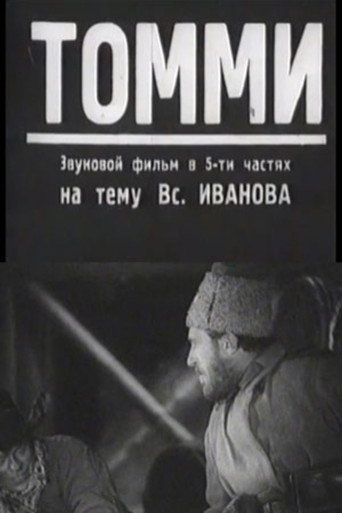
A Russian war correspondent is drafted into the war and finds himself in the middle of battle. When he loses his party card, however, he is treated as a deserter until he finds help from a kind man. This Soviet war feature was considerably outspoken for the time as it addressed issues such as anti-Stalinism, Siberia and the inhumanity of war. Adapting his screenplay from a book by Constantin Simonov, Alexandre Stolper was responsible for writing as well as directing.
Farmer Jan Alting, who has disowned his son for collaborating with the nazis, provides shelter for a Jewish couple, a wanted communist and a rebel aristocrat. When his son returns, Jan is faced with the stark moral choice of failing those to whom he has given refuge, or conspiring with them to kill his own son.
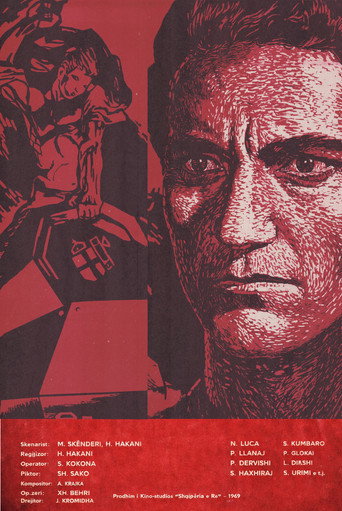
During WWII in Albania, partisans assassinate the collaborationist Colonel Makareci and destroy an enemy arsenal, but betrayal leads to guerrilla fighter Drita to be captured. When Pedro is ordered to execute her to prove loyalty, he reveals his identity and comrades mount a daring rescue, capturing the fascist police chief.
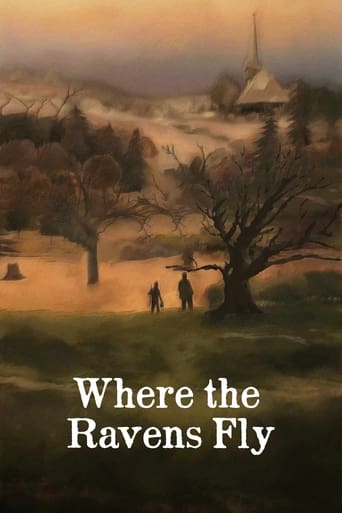
Set in the dense forests of 1940s Eastern Europe, this story reveals the supernatural encounters that challenge three soldiers' understanding of life and death.
The story of a British POW who converts to communism.
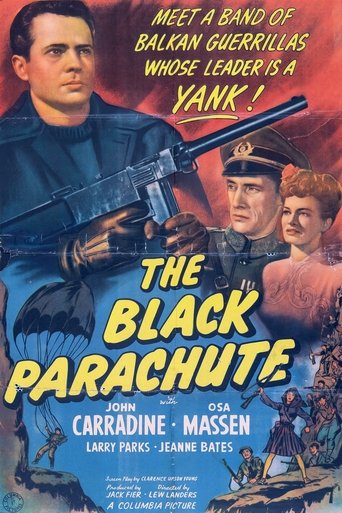
A paratrooper drops behind enemy lines to rescue the deposed king of a mythical Balkan nation.
This documentary is a compilation of silent black-and-white film footage shot by the Japanese in Hiroshima and Nagasaki shortly after the atomic bomb blasts in early August 1945. English-language voice-over narration has been added, along with a few scenes from American sources. The film shows the destruction and injury caused by the atomic bombs in graphic detail.
The film uses Chinese actors to play the Japanese protagonist, uses Chinese perspectives to criticize Yamato’s militarism, and is filmed by a Taiwanese director born after the war. The story of the Japanese imperial army during World War II is a prominent feature in the history of Chinese cinema. Try. Although the creative ambition of the director Zhou Teng affected the overall performance of the film because of his wishful thinking on the theme and handling, his efforts in exploring new themes and the rigorous production attitude are still worthy of recognition.
An ailing communist reflects on a young boy childhood in Stalinist Yugoslavia.
Лента рассказывает о реальных событиях конца февраля 2000 года, произошедших в Аргунском ущелье в Чечне. Бойцы 6-й роты 104 парашютно-десантного полка Псковской дивизии ВДВ вступили в жестокий бой с двадцатикратно превосходящими силами террористов. Десантники не дрогнули, не отступили и выполнили задание, ценой своей жизни преградив путь бандитам, прорывающимся из окружения.
A group of young mice is in the ruins of a church, practicing singing for an upcoming service. After singing an adulterated version of "Hark! The Herald Angels Sing," the mice wonder about the last line, "Good will to men." One of them asks the choirmaster, an old mouse, "What are men?" The old mouse explains that they all killed each other off by building bigger and more destructive weapons, first guns, then missiles, then bombs.
Jeanne writes during WW II for a French clandestine journal. She is engaged to resistant leader Victor Devère but has a love affair with the young resistant Marc Hétier. But is Marc really trustworthy?
Charlie's War is the story of Charlotte Lewis, a woman who is experiencing serious emotional and mental turmoil brought about by nightmares of increasing intensity. In the dreams, she is a young girl, and she runs from unknown terrors. Trying to understand her troubling dreams, Charlotte revisits part of her childhood, which comes back to her in a series of impressionistic memories. Charlie, her sister, Jobie, and her mother move in with her grandmother. It is 1944, and World War II rages in Europe and the Far East. Though Grandma's farm seems to be a peaceful refuge, there is an undercurrent of fear and brooding menace in their surroundings.
Stalags were pocket books whose plots revealed lusty female SS officers sexually abusing camp prisoners. During the 1960s, parallel to the trial held against Nazi war criminal Adolf Eichmann, sales of this pornographic literature broke all records in Israel and hundreds of thousands of copies were sold at kiosks. The popularity of the Stalags only declined after a much-reported trial, in which their authors were accused of distributing anti-Semitic pornography. This film examines the notorious phenomenon, exposing the creators of this genre for the first time. It posits that the combination of pornography and the Holocaust also appears in canonic Holocaust literature and continues to be a widespread part of the representation of the Holocaust in Israel today.
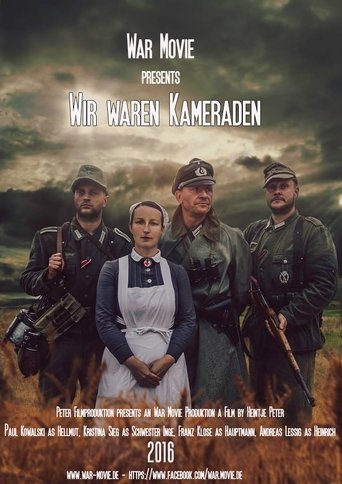
Based on Wehrmacht soldier Hellmut Böttgert's experiences during the last years of World War II.
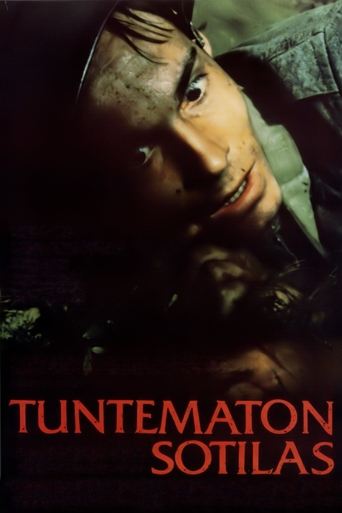
Second silver screen adaption of the Finnish war book by Väinö Linna. The story is based on Linna's experiences as an infantry man in the Finnish army during the so called "Continuation War" (1941-1944).
Just outside Belfast in 1974, a British soldier faces the realisation that he can't stand by and let his superior officers treat the public in a violent and disrespectful manner. Whilst on duty at a roadblock, the consequences of his actions will have a devastating effect on those around him.
Activate your FREE Account!
You must create an account to continue watching