Two American POWs break out of a Japanese jungle prison camp with their captors' secret decoding device and try to reach freedom despite being slowed by an opportunistic sea captain, his pretty daughter, and a black marketeer.
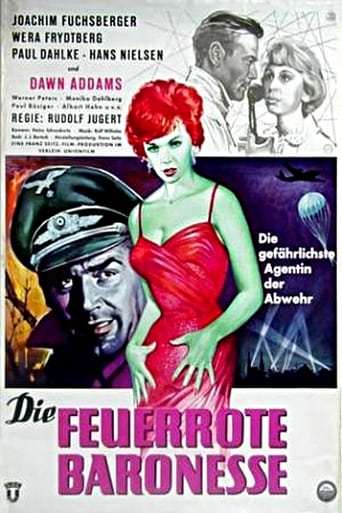
During the final days of the Second World War, British intelligence sends an agent to Berlin to try to discover the secrets of Nazi Germany's nuclear weapons program.
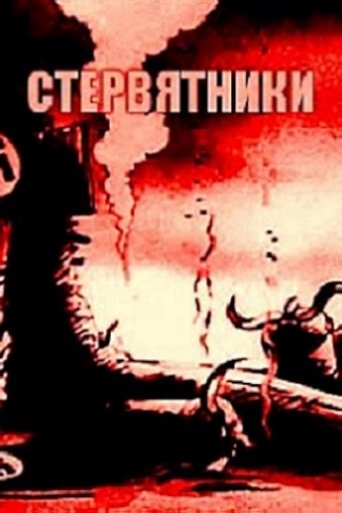
Wartime Soviet propaganda cartoon. The short shows the fascist threat, symbolised by vultures, and glorifies Soviet defence, represented here by the airforce.
Dutch patriots, a U.S. officer and a British spy fool the Nazis with a fake Soho film company.
During the WWII, fter leaving the hospital, a young lieutenant spends a few hours in Moscow, in the house where he spent his childhood and youth.
The film, which brings Turkey's recent political agenda to the big screen, highlights the effects of recent events on the present day and their traces in political life. The coup, which took place on February 7, 2012, when Hakan Fidan, the Undersecretary of the National Intelligence Organization (MİT), was summoned for questioning as a suspect in the KCK investigation, centers on the causes and consequences of the MİT crisis. The film will also address the placement of listening devices, known as "bugs," in the offices of some high-ranking officials, including the prime minister.
At 35, Andrés leads a quiet life; he lives in Mexico City and has a girlfriend he plans to marry. His only relative is his mother Clara, who came to Mexico fleeing from the Spanish dictatorship years ago. One day, by chance, Andrés finds out he has a grandfather who lives in a village in Galicia. This news causes such an emotional response in him that he decides to leave everything and travel to Spain to reconstruct his own past and meet Justino, his grandfather.
Death in all it's faces and stages. From the horrors of Buchenwald to the devastation of Hiroshima. From the political assassinations of the second half of the 20th century to the bloody feeding frenzy of the pythons of Burma. Burned on to the screen like napalm victims of Vietnam. Followed by "Death in Focus" part 2.
A filmed 1970 performance of the China Central Ballet Troupe. Adapted from the film of the same title, The Red Detachment of Women was first staged in Beijing in 1964 and was one of the Eight Model Operas which dominated the national stage during the Cultural Revolution.
During the Second World War a big plant in Urals region gets an order from the State Defence Committee: to double the output of the tanks T-34 within 24 hours. All physical and emotional strength of all plant workers needs to be exerted to fulfill the plan. The workers labor heroism is revealed through the story of a hereditary worker's family. His shoulders are burdened not only with a physical job, but also with responsibility for his younger son, who runs to the front without permission, not understanding that his battle-front is right here, on the plant.
Coexist tells the emotional stories of women who survived the Rwandan genocide in 1994. They continue to cope with the loss of their families as the killers who created this trauma return from jail back to the villages where they once lived. Faced with these perpetrators on a daily basis, the victims must decide whether they can forgive them or not. Their decisions are unfathomable to many, and speak to a humanity that has survived the worst violence imaginable.
John Merrick and Vilma Walden, who fall in love at an embassy fundraiser in Vienna before World War I. Vilma's brother, Carl, who is a war veteran, poses as a rival for Vilma's affections. When war erupts, John requests a transfer to the Italian front, where he confronts Carl, who had borrowed his aircraft for a mission. John is devastated to learn the pilot he downed was actually Carl, leading him to announce he will no longer kill.
Samvel and Avo, Erik and Karen live in the land of a century-old conflict, rooted in the rubble of the Russian Empire. In Nagorno-Karabakh, people live, dream and prepare for a tragedy that is always on the horizon. Over 3 years, Alexis Pazoumian films the epilogue of the black garden, a land where war waits for no one.
The life story of emperor Ashoka.
Summer 1918. There is a danger of ships being captured by Germany in the Black Sea Fleet. The Soviet government decides to destroy the fleet. The film tells about the intense struggle of the Bolsheviks against the forces of counterrevolution trying to disrupt the execution of the order.
Paper-Scissor-Rock wars draws an episode where the two generals portray the Second World War, mostly through the rock-scissors-bag, but also by some absurd torture techniques that bring to mind some sort of Japanese artificial 70s jack ass. To the sound of classical music, birds chirping and Nazi incendiary speeches travels generals, ever contestant in the seemingly meaningless game around at an abandoned industrial area.
World War II, occupied Soviet Union. István Semetka is a simple Hungarian farmer who serves as a Sub-Lieutenant in a special unit scouting for partisan groups. On their way to a remote village, his company falls under enemy fire. As the commander is killed, Semetka has to overcome his fears and take command of the unit as he is dragged into a chaos that he cannot control.
In 1994, Sarajevo was a city under siege. Mortars and rocket propelled grenades rained onto the city, killing indiscriminately, every day. Amongst the madness, two United Nations personnel: a British military officer and another Brit working for the UN Fire Department, decided it would be fun to persuade a global rock star, Bruce Dickinson of Iron Maiden, to come and play a gig to the population. Scream for Me Sarajevo brings that story, in all its madness, to the big screen. A story of musicians who risked their lives to play a gig to people who risked their lives to live them.
Determined to bring honor to her family, Mulan lies her way into the army to protect her father.
Theatrical Inka - Danuta Siedzikówna - survived the death of her mother, who was murdered by the Gestapo in Bialystok in 1943. Her father died in Tehran after leaving a Soviet gulag. The orphaned sisters, Inka and her siblings, were raised by their grandmother. The heroine was an AK nurse. She was sentenced to death for joining the unit of Major Szendzielarz alias Łupaszko, which was subordinate to the legal authorities of the Republic of Poland in exile. The judges relied on false testimony from militiamen, which, by the way, did not fully incriminate her. In a secret message to her grandmother, Siedzikówna wrote: "Tell my grandmother that I behaved as I should."
Activate your FREE Account!
You must create an account to continue watching