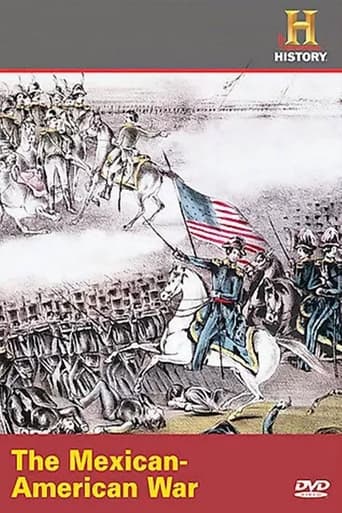
One of the most controversial conflicts in U.S. history, the Mexican-American War erupted as President James K. Polk sought to extend the borders of the nation to the Pacific, taking by force whatever territory stood in the way. This special, produced by The History Channel and hosted by Oscar de la Hoya, looks at the war from the perspective of both countries, and chronicles the fighting from its inception to its conclusion with the Treaty of Guadalupe Hidalgo.
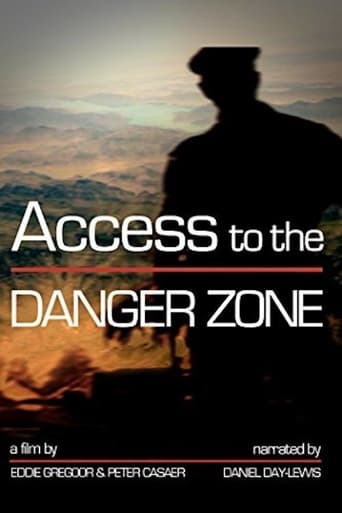
Directed by Peter Casaer and narrated by Daniel Day-Lewis, this documentary provides a harrowing look at the challenges of delivering humanitarian aid in armed conflicts. “Access to the Danger Zone” explores the strategies that Doctors Without Borders has employed to save lives in the world’s worst war zones, including Afghanistan, Somalia, and eastern Democratic Republic of Congo—strategies that are tested each and every day. Interviews with key experts from Doctors Without Borders, the International Committee of the Red Cross, and the United Nations are accompanied by dramatic footage shot in these countries in 2011 and 2012.
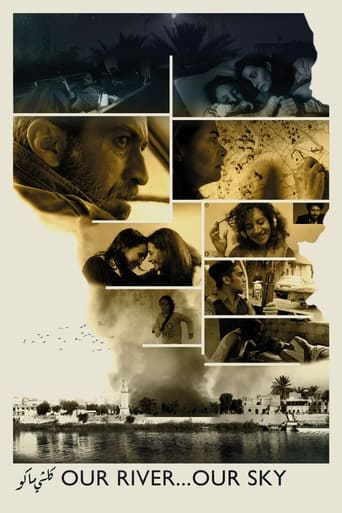
In a typically mixed Baghdadi neighbourhood in 2006, a community of ordinary people try to live their everyday lives amidst the threat of unpredictable violence. At the heart of these intersecting stories we find Sara, a single mother and novelist, who regains her will to write after witnessing the forced exile of her Christian neighbour and best friend Sabiha. With the news of Saddam Hussein's sudden execution shortly before the New Year, Sara and her neighbours brace themselves for an uncertain future. Yet, like a miracle, each is able to sustain a fragile sense of hope.
The story of Zeinal, a man who after 20 years of being a POW, tries to clear up his past.
A story of young serving in the Soviet Army boy and his adventures during WWII.
The untold story of a Jewish baby who was born in the death camp before the liberation and survived. An extraordinary journey of the second and third generation, breaking the cycle of trauma to free themselves from Auschwitz - forever.
Mother Feng and her family struggle to live before and during the Japanese invasion of China.
Like many boys and girls whose early years included the Great Patriotic War, 16-year-old Dusya was eager to go to the front. She and her family lived not far from Sukhumi, and not a week passed without Dusya stopping by the local military registration and enlistment office. Each time the military commissar refused to grant her request, but Dusya did not give up and one day she was offered to enter an intelligence school.
Reyes Mendoza (Carmen Sevilla) is a Spanish artist who arrives in Mexico in 1913 and finds herself involved in the Pancho Villa (Jose Elias Moreno) revolution.
َA father, Daei Ghafur, does not accept his son's death during 1980-1988 conflict between Iran and Iraq, and believes he is alive despite all evidence indicating otherwise. One day he meets a young lady, Shirin, at the airport who has travelled from Europe to Iran looking for his brother, Khosrow, a missing soldier at war. Both start searching their loved ones...
After a masterful Shakespearean performance in a London theater, Ralph Richardson is sought for an autograph by Fred, his dresser. Later, Fred has joined the Fleet Air Arm (Fly Navy) and become a hero, rescuing a pilot from his burning plane. When Fred arrives at Buckingham Palace, it's Ralph's turn to ask for an autograph.
The film is set in the winter-spring battle that lasted 60 days and nights from late 1946 to early 1947 in Hanoi, the story follows the militiaman Van Dan and his love story with the piano-loving lady Thuc Huong. When others had evacuated to the war zone, they decided to defend the capital that had been devastated by bombs and bullets, despite the dangers that awaited them.
A Royal Air Force (RAF) airman who dies during a mission has left a letter to be sent to his mother upon his death.
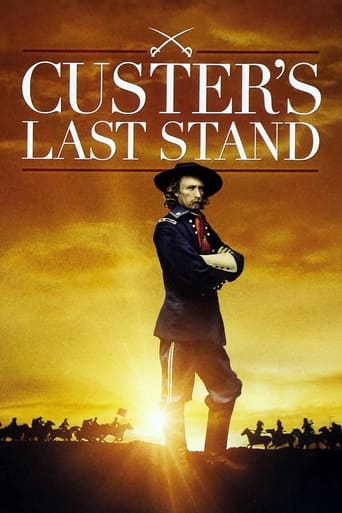
Follow General George Armstrong Custer from his memorable, wild charge at Gettysburg to his lonely, untimely death on the windswept Plains of the West. On June 26, 1876, Custer, a reputation for fearless and often reckless courage ordered his soldiers to drive back a large army of Lakota and Cheyenne warriors. By day's end, Custer and nearly a third of his army were dead.
In 1944, SS-Obersturmbannführer Becher arrives in Budapest in order to obtain material for the Waffen-SS. At the same time, he starts to gather private property by offering an insidious choice to the corporation′s Jewish majority shareholder, Dr. Chorin: Either Chorin assigns the company to Becker "on his own free will" – thereby obtaining the permission to travel abroad - or he his family will end up in an extermination camp.
Showcases 3 major events during World War 2 involving both the Europeans & Pacific conflicts. The Raids to destroy Nazi Germany's heavy water production based in Norway, plus the final desperate act to deny them what had already been stockpiled. The Japanese midget submarines role and participation in the attack on Pearl Harbor, December 7, 1941. What they achieved plus what was their ultimate fate. The attacks on United States warships in the Pacific late in World War 2 by the Japanese Kamikaze and Okha Squadrons. The Kamikaze attacks were in whatever planes the Japanese forces were able to gather. The Okha attacks were made in specially built flying bombs that were towed by larger and usually slower aircraft that were not suitable for fighter work.
In a rough style, by way of unique footage, the brutal consequences of modern wars are exposed. The film also depicts the ability of women and children to handle their everyday life after a dramatic war experience. Many of them live in tents or in ruins without walls or roofs. They are all in need of money, food, water and electricity. Others have lost family members, or are left with seriously injured children. Can war solve conflicts or create peace? The film follows three children through the war and the period after the ceasefire.
A rare documentary that shows how Soviet war propaganda presented the events of the Finnish front in 1941–1944. The main emphasis is on the resolution of the war. The film contains plenty of unique footage of the final stages of the Continuation War.
In WWI, a pilot’s teddy bear and an infantryman’s lost photo drift through chaos, their fragile presence briefly disrupting the brutal rhythm of battle.
Soldiers ambush a house. This is the Alice Guy version, not to be confused with the less accessible Lumiere of the same title from the same year.
Activate your FREE Account!
You must create an account to continue watching