Based on Érico Verissimo's literary trilogy, Time and the Wind follows 150 years of the Terra Cambará family and their opponents, the Amaral family. The struggles between the two families begin in the missions and lasts until the end of the 19th century. The film also features the period of formation of the state of Rio Grande do Sul and the dispute of territory between the Portuguese and Spanish crowns.
An Italian war bride has problems dealing with her husband's possessive mother.
Two friends are army officers, and the turbulent times throw them from the Civil War in the early 20s to the Soviet conflict in Finland, from China to the Urals.
Story of Podgaje massacre in January 1945 in which SS troop murdered captured Polish soldiers.
American soldiers, led by The Sarge, are stuck behind Nazi enemy lines. As they make their way across the Italian countryside, they come across an alien spaceship that has crash-landed in the woods. The alien pilot is dead, but one of the ship's passengers is on the loose. As the GIs hunt down the alien by splitting into smaller groups, they're not only tracked by the Nazis, but also a whole host of other aliens come to save their stranded party.
After the planes hit on 9/11, Morgan Stanley security chief Rick Rescorla put into effect plans that he had developed years before. Rick had seen the potential for an airborne suicide attack on the twin towers as part of evaluating the risk posed to his wards within their building. After the attack in 1993 Rick took it personally to prepare and avoid the chaotic scenes that came with the 93 attack. This documentary tells the story of the man who predicted the 9/11 attacks and saved thousands of lives and died in the process.
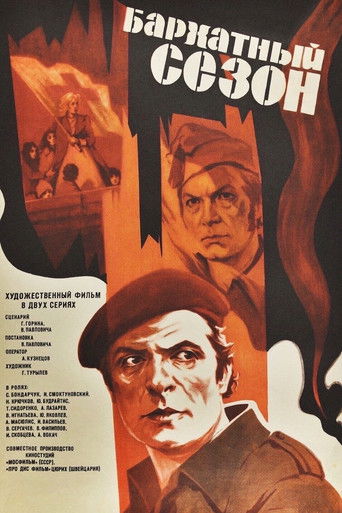
A second episode in the trilogy about the partisans fighting against the Nazis during the WWII on the territory of Russia. Film is set in the winter of 1943-1944. Major Mlynsky is the commander of the partisan group, that is fighting behind the Nazi's front-lines. Major Mlynsky is invited to the Chief of Staff, where he is promoted to Lt.-Colonel for his courage. Now Mlynsky is in charge of the new partisan's operation.
Explosions are raging in one of the ports in the territory occupied by the German fascist invaders. An old and experienced military leader, Admiral Reinhardt, arrives to investigate these emergencies. Together with the head of the Gestapo, SS Standartenfuehrer Hübe, he takes all measures to suppress the activity of the partisans, raids and arrests, but all in vain. Underwater sabotage continues. A detachment of fighters with experience of submarine warfare is sent from Italy to fight the demolitions.
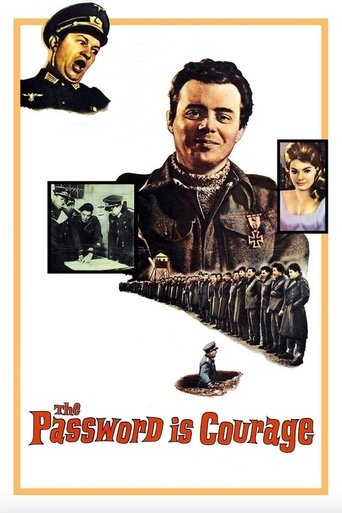
Sergeant-Major Charles Coward, a brave British soldier is captured by German forces during World War II. When he's thrown into a prisoner of war camp, he immediately plans his escape. Masquerading as a wounded German soldier, he makes it as far as the medical tent, where the deceived enemy forces award him the Iron Cross. Though he is ultimately discovered, he goes on to courageously pursue his freedom with a whimsical and undying audacity.
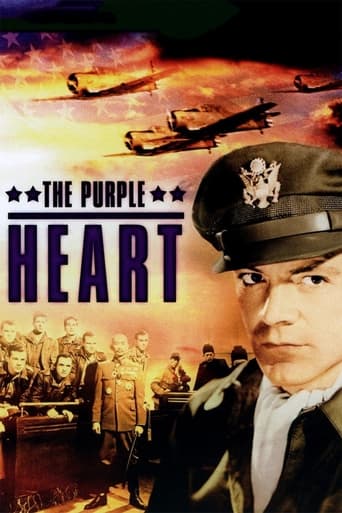
This is the story of the crew of a downed bomber, captured after a run over Tokyo, early in the war. Relates the hardships the men endure while in captivity, and their final humiliation: being tried and convicted as war criminals.
A boy from Leningrad has his world turned upside down by his parent's separation and World War II. He leaves town amidst the fighting and returns to find a friend in his step-brother. The war is seen through the eyes of children and told in flashback form. The film was a special prize winner at the Venice Film Festival.
Based on the medieval fair called Mamankam, which was celebrated every 12 years between 800 AD and 1755 AD, the story of the film is supposedly about a brave warrior of Malabar and his loyal soldiers.
During the Anti-Japanese War, Eighth Route Army officer Ma Ying returns to his hometown to mobilize resistance against Japanese forces and traitors. As enemies plot to turn villagers against each other, Ma Ying must rally the people to prevent a devastating massacre.
Mustafa Kemal had just begun his journey after proving himself in 1915 at the Gallipoli front. He would go on to face major battles on the eastern front against the Russians and later against the British in Syria, ultimately becoming the only Ottoman officer not to lose a battle during WW1. However, despite all his success, he would encounter an unexpected challenge upon his return to Istanbul.
In the fall of 1938, three former fighters of the international brigade — russian Shukhov, frenchman Henri and american Liz — fall into a resort town on the border of Spain and France. Having met a nurse who is supposed to send Spanish children to Corsica, they decide to help her. However, a fascist rebellion suddenly breaks out in the city, and the children are held hostage to criminals.
Belgrade, 1999. Producer Sergei and his film crew are in a disastrous situation - the film they're making is under threat - there's no money, the crew are dissatisfied - and NATO bombing is just around the corner. Then a member of the State Security Service (Mileta) comes looking for American co-producer Harvey. Anxious and worried, in the midst of the bombing that's begun, Sergei hides Harvey from what he thinks is awaiting him - arrest. During the night, he thinks up a plan. He announces the start of filming on a new, patriotic film - in which the main role will be played by Harvey. The plan works - the State supports the film and Mileta, as the State's representative, joins the crew. However, the underlying conflict between Mileta and Sergei explodes during the first screening. Mileta accuses them of being artists, and not being patriots.
While Hans Jurgen Höss enjoyed a happy childhood in the family villa at Auschwitz, Jewish prisoner Anita Lasker-Wallfisch was trying to survive the notorious concentration camp. At the heart of this film is the historic and inspiring moment – eight decades later – when the two come face-to-face. This is the first time the descendant of a major war criminal meets a survivor in such a private and intimate setting, Anita’s London living room. Together with their children, Kai Höss and Maya Lasker-Wallfisch, the four protagonists explore their very different hereditary burdens.
A turbulent era in Argentine politics is highlighted in this well-wrought drama, set in Buenos Aires at the end of 1945, about Clara (Graciela Borges), a young, half-Jewish woman awakening to the reasons behind the political conflicts of her time and place. Clara's father was a Communist who fought the Nazis in Argentina and possessed a list of the top Nazi exiles and their contacts. Through a former lover, Clara -- a successful broadcast journalist -- begins to see her Jewish roots (and the leftists) in a whole new light. Meanwhile, the political storms sweeping through Argentina are setting the stage for the Peronist government to come.
Is there nothing new under the sun? 1770. The South Atlantic. A fleet sets sail from Buenos Aires to expel the British forces and reconquer the Falkland Islands. A major international crisis explodes. What follows may sound strangely familiar, but is firmly based on the historical record and the actual speeches and writings of the time.
Activate your FREE Account!
You must create an account to continue watching